Get Premium
Dark mode theme is available exclusively for premium users. Learn more about the benefits of subscribing.
No fees, cancel anytime.

 Dark Mode Ad-Free Browsing Unlimited Content
 Ad-Free Browsing Unlimited Content Dark Mode
Join 1.2 million Panda readers who get the best art, memes, and fun stories every week!

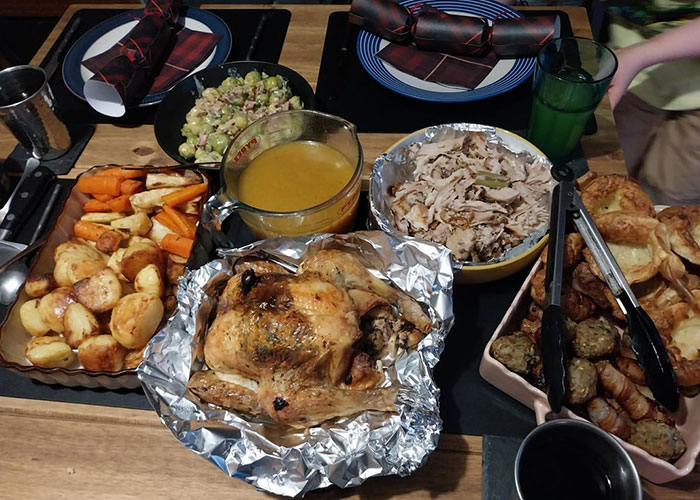
People have many different Christmas traditions. Some go to church on Christmas Eve and Christmas morning. Others take a holiday to somewhere sunny and warm. Yet Christmas dinners remain a staple for most. In fact, 94% of Brits say they will have a traditional Christmas meal on December 25th.
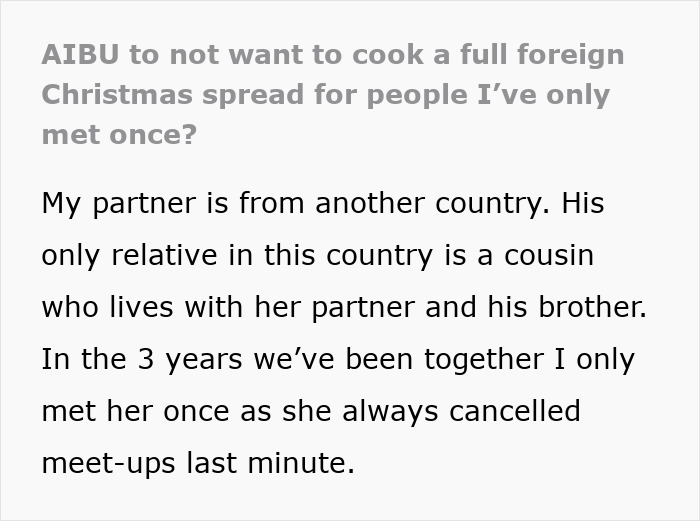
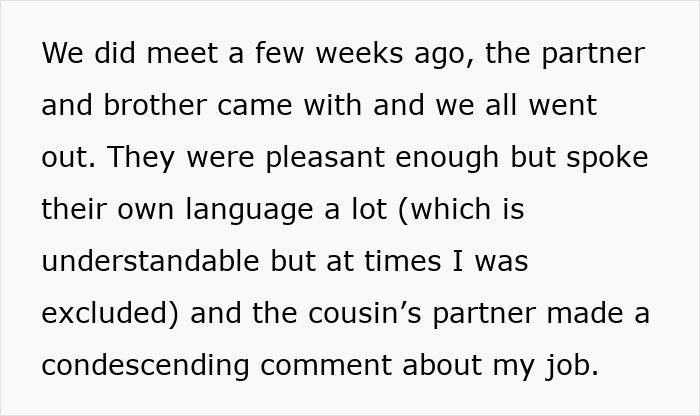
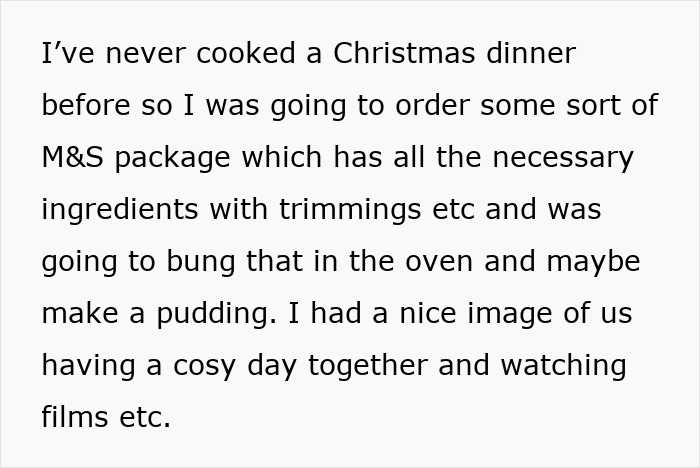
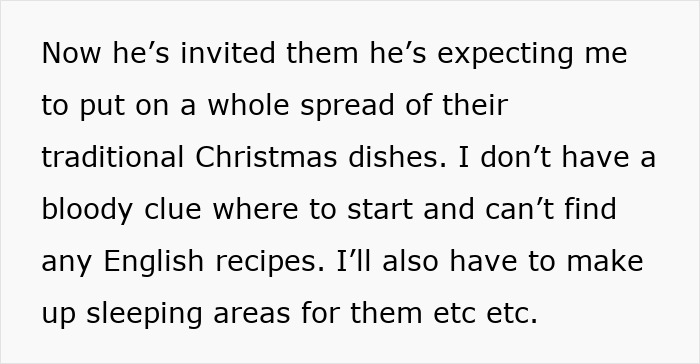
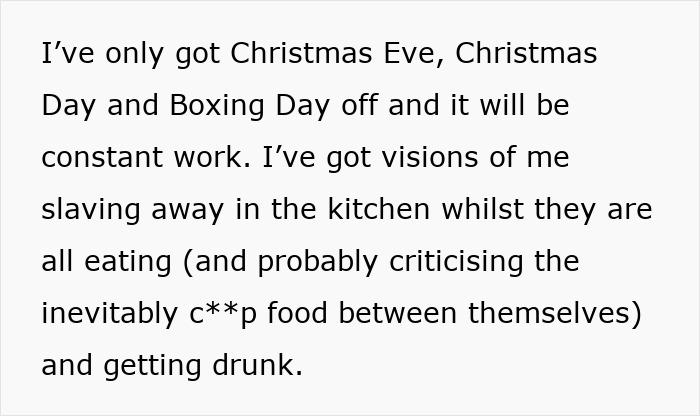
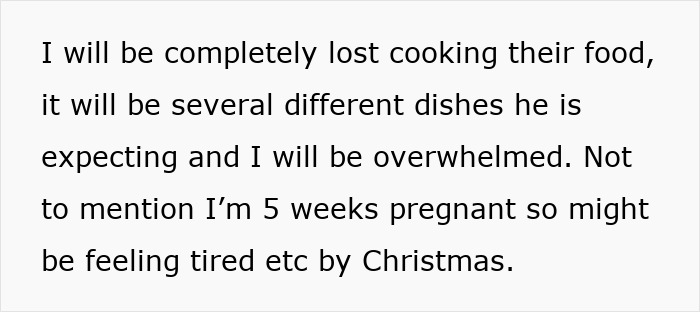
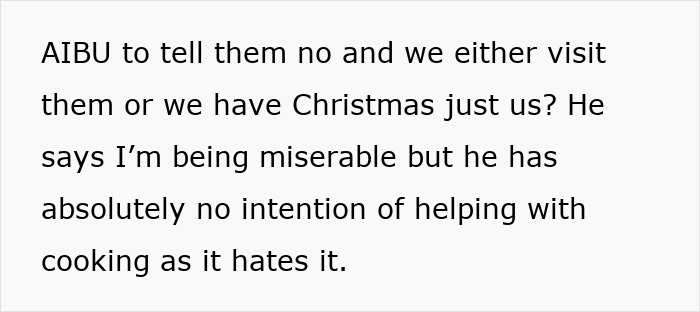
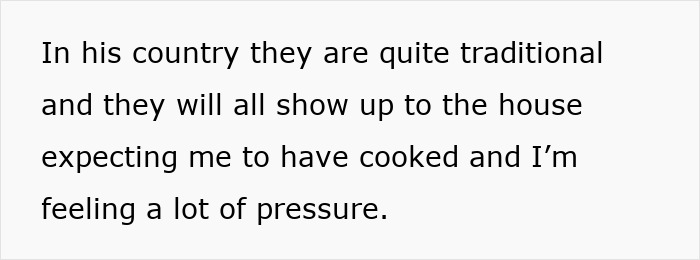
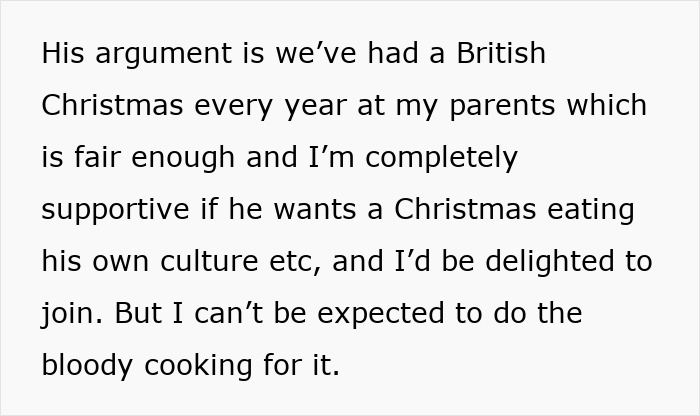
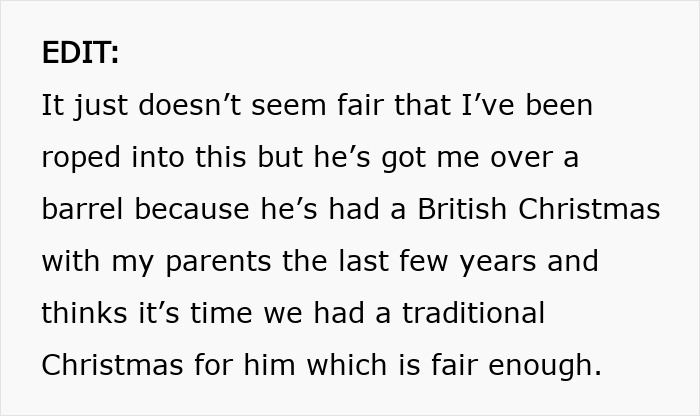
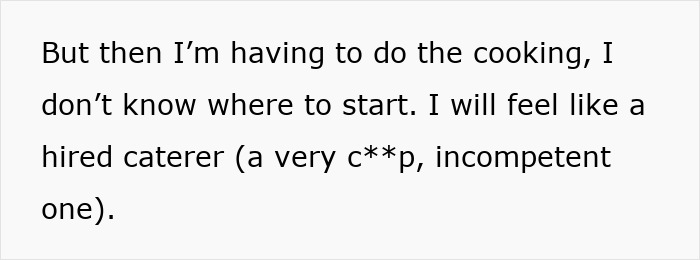
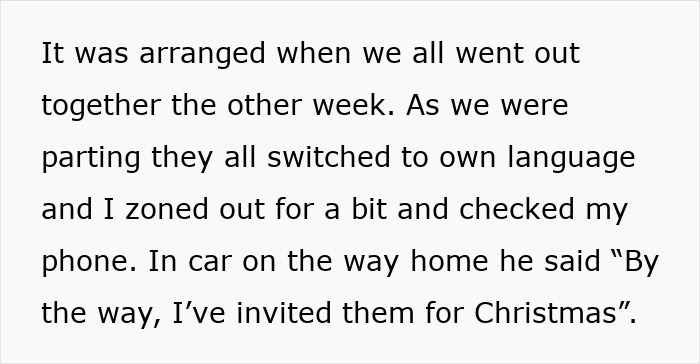
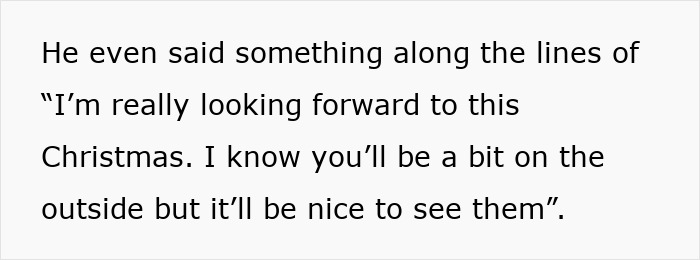
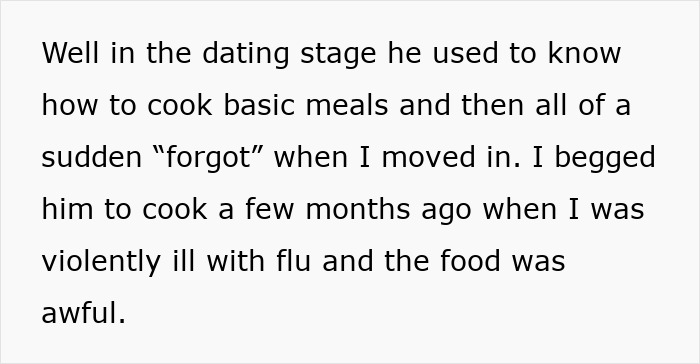
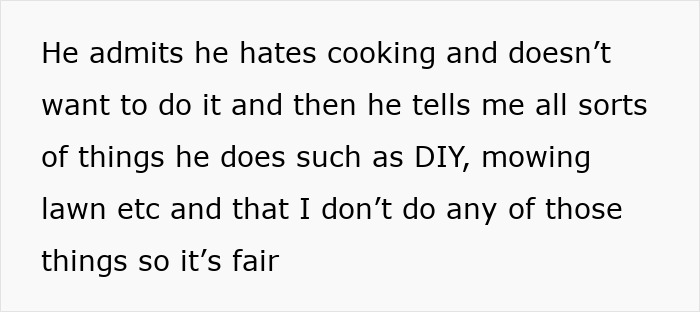
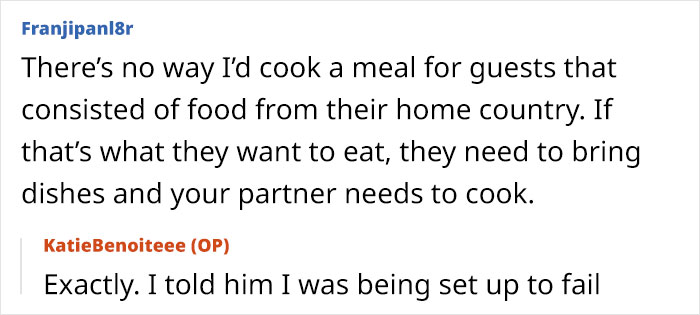
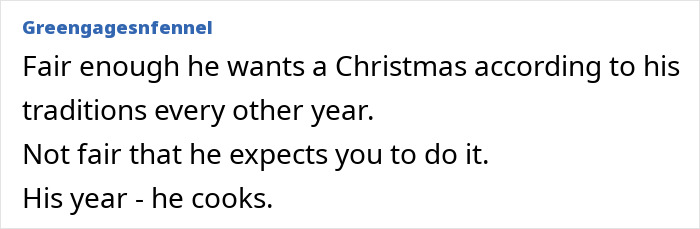
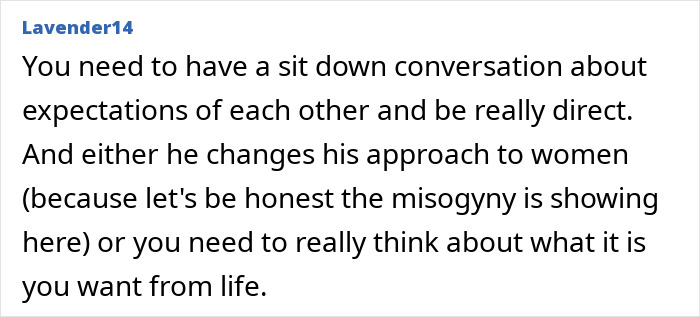
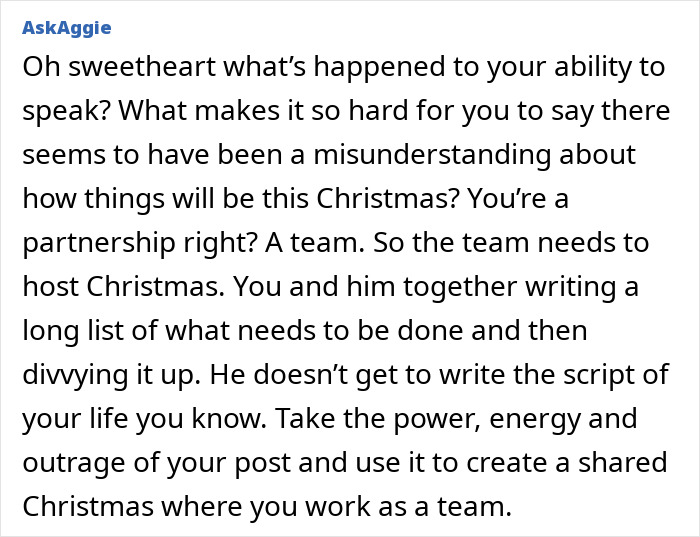
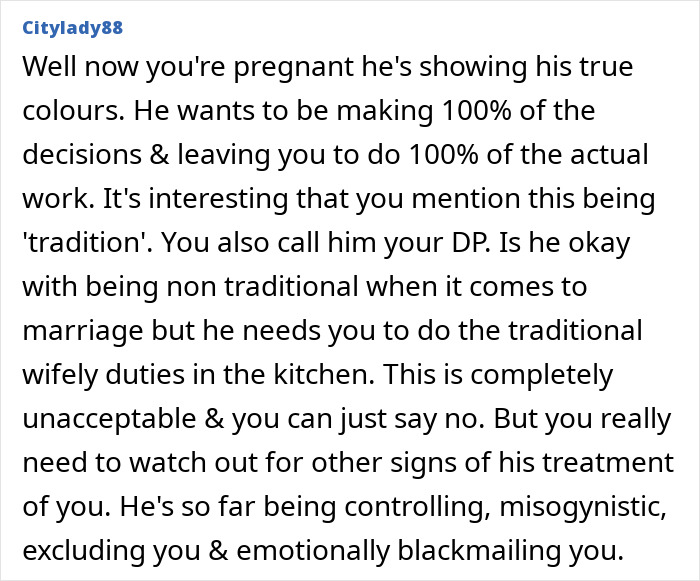
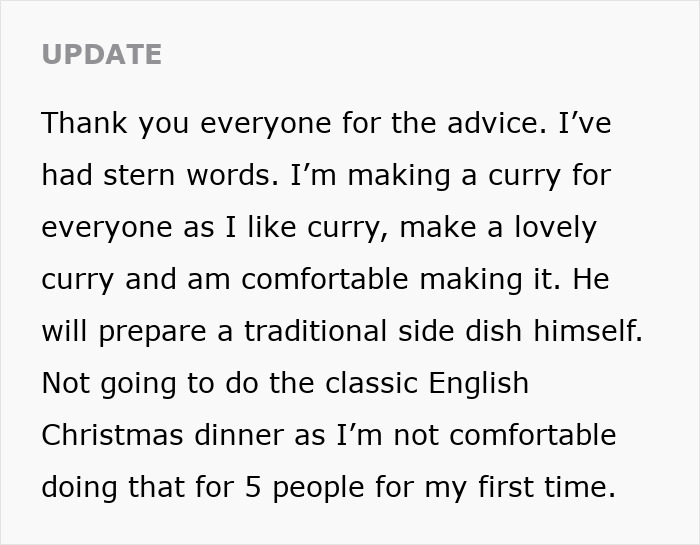
This man wanted a Christmas that reflected his culture, but expected his partner to do all the hosting and cooking. Feeling like this was an unreasonable request, the woman asked for advice online: would she be the jerk in this situation if she refused, especially since she would be three months pregnant?
Image credits: avistock / freepik (not the actual photo)
Image credits: wavebreakmedia_micro / freepik (not the actual photo)
Image credits: Successful-Bobcat-31 / reddit (not the actual photo)
Image credits: Wavebreak Media / freepik (not the actual photo)
Image credits: user25451090 / freepik (not the actual photo)
Image credits: KatieBenoiteee
Image credits: Wavebreak Media / freepik (not the actual photo)
When you’re a kid, Christmas is a magical time. But you often don’t know the effort and time that go into planning it all. Presents, decorations, cookies, and the perfect Christmas dinner don’t just appear out of thin air. That’s all done by grown-ups, and there’s even some inequality among them.
In the UK, most of the festive work is done by women. A 2013 YouGov poll showed that married women and those who live with a partner are responsible for the majority of Christmas tasks in the household. Only one task was said to be done by men more often: washing the dishes. 51% of women said they do the Christmas cooking, while only 17% of men said the same.
Mothers usually find the entire holiday season difficult. Last year’s YouGov poll shows that the majority (62%) of moms say Christmas time is stressful. In comparison, only 44% of dads and 45% of women who do not have children also find the period stressful.
At this point, it seems that the words “Christmas” and “stress” always go together. According to a survey by the UK kitchen and bedroom retailer Betta Living, women spend an average of three hours in the kitchen preparing the meal. “Despite a joint effort in cleaning up and setting the table, [it] is still traditional for women to cook the Christmas dinner, and for the men to dish out,” Barry Rourke of Betta Living commented.
So, gender roles persist even where Christmas tasks are concerned. There’s nothing wrong with asking your partner to cook a Christmas spread if they’re better at it, but it’s better to discuss it first and not make arrangements behind their back.
Image credits: Wavebreak Media / freepik (not the actual photo)
In different cultures, Christmas time means different things. Some celebrate it, others don’t, and some may celebrate it slightly differently than in the Western world. In this day and age, multicultural couples aren’t a novelty. But when it comes to navigating the holidays, it can be hard to decide which partner gets the honors this year.
According to the 2021 Census, 5.7% of couples in the UK are in an inter-ethnic relationship. While that may present a headache once the holidays roll around, it’s also a great opportunity to honor both cultures. Couples therapist Brandon Liu suggests these three strategies for making compromises:
Couples can treat their cultural differences as the chance to create new traditions, too. Marriage and family therapist Daniel Dashnaw writes that, according to research, couples who co-create new holiday traditions report better relationship satisfaction.
“Blending traditions isn’t just about compromise; it’s about co-creating new rituals that reflect your shared life as a couple,” Dashnaw reiterates.
Image credits: The Yuri Arcurs Collection / freepik (not the actual photo)
Image credits: KatieBenoiteee

By entering your email and clicking Subscribe, you're agreeing to let us send you customized marketing messages about us and our advertising partners. You are also agreeing to our Privacy Policy.
Thank you! You've successfully subscribed to newsletters!



I wouldn’t, but I expect she feels conflicted (?) because she’s pregnant.
Load More Replies...

It doesn't matter if his country or his family are the misogynist type of traditional, it's your house and your relationship - their expectations don't matter. But I would reconsider having a child with someone who isn't even going to cook their own family dinner when it is so "important"
I wouldn’t, but I expect she feels conflicted (?) because she’s pregnant.
Load More Replies... It doesn't matter if his country or his family are the misogynist type of traditional, it's your house and your relationship - their expectations don't matter. But I would reconsider having a child with someone who isn't even going to cook their own family dinner when it is so "important"































 No fees, cancel anytime
 then open in external browser


 and click "Open in External Browser"























31
44