Get Premium
Dark mode theme is available exclusively for premium users. Learn more about the benefits of subscribing.
No fees, cancel anytime.

 Dark Mode Ad-Free Browsing Unlimited Content
 Ad-Free Browsing Unlimited Content Dark Mode
Join 1.2 million Panda readers who get the best art, memes, and fun stories every week!
Children can be a lot on any given day. Caring for them means sleepless nights, endless patience during tantrums, and somehow trying to squeeze in a few quiet minutes for yourself just to stay sane. If you’re a parent, you already know how demanding that balance can be.
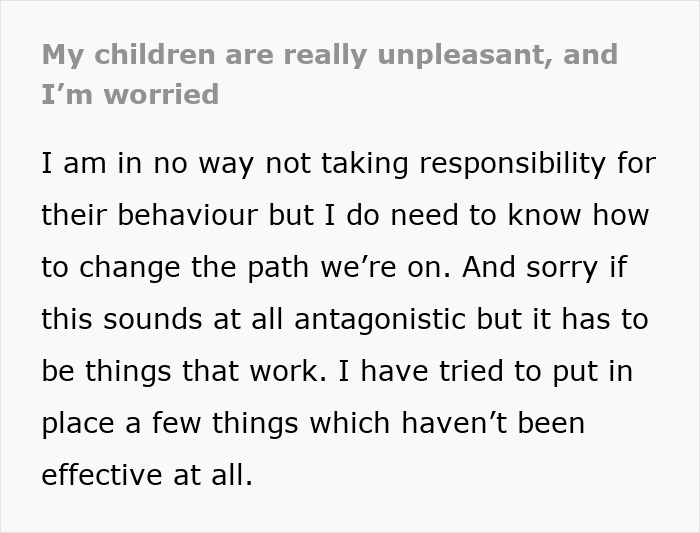
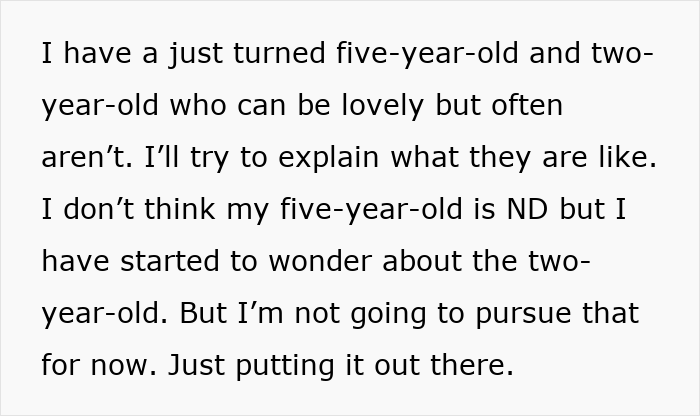
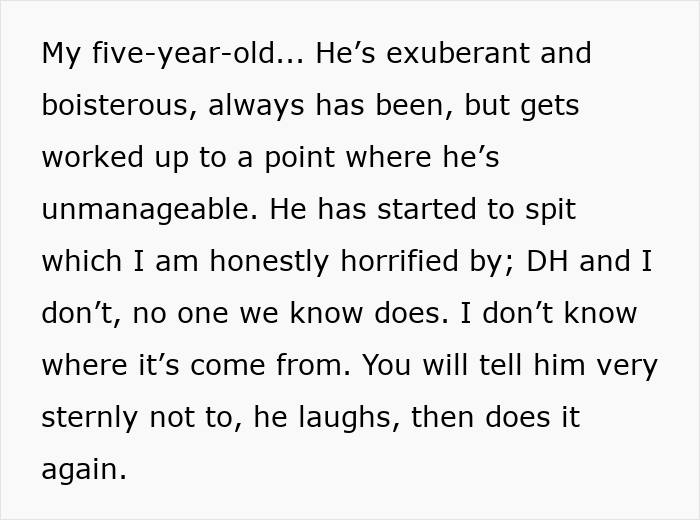
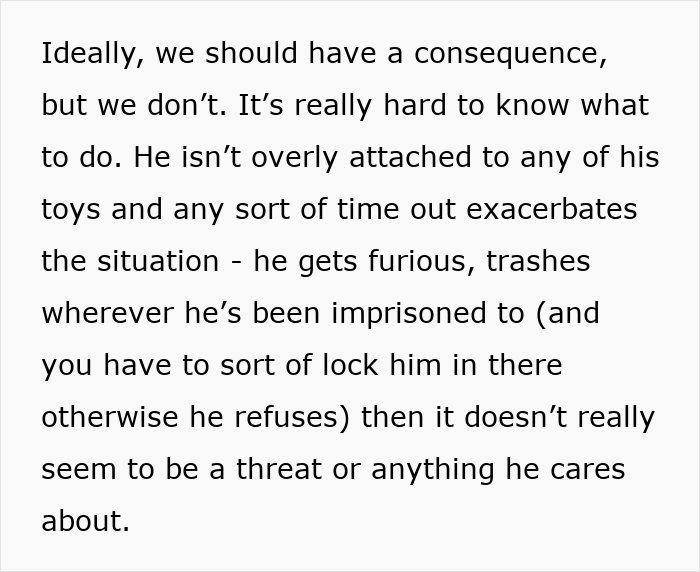
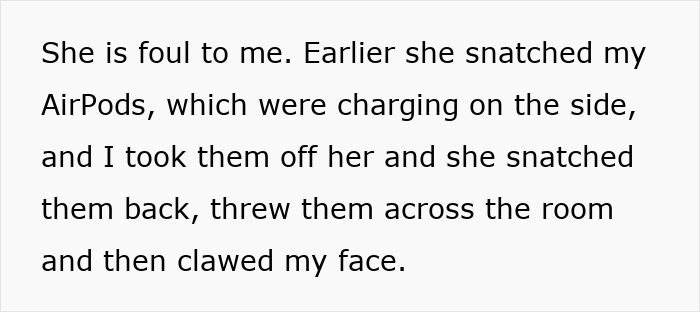
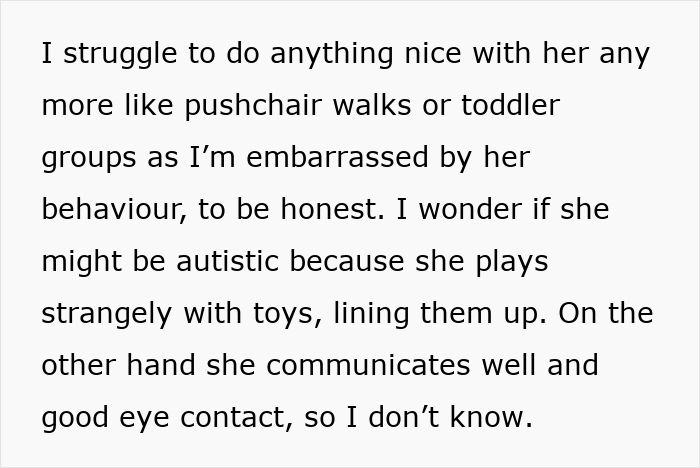
But sometimes, the daily chaos can start to feel truly overwhelming. One burned-out mother recently turned to the internet for help, unsure what to do about her 5- and 2-year-old’s increasingly difficult behavior. From kicking, screaming, and spitting to completely ignoring her, she admitted she was at a total loss. Read her story below.
Image credits: Keira Burton / Pexels (not the actual photo)
Image credits: Keira Burton / Pexels (not the actual photo)
Image credits: Kateryna Hliznitsova / Unsplash (not the actual photo)
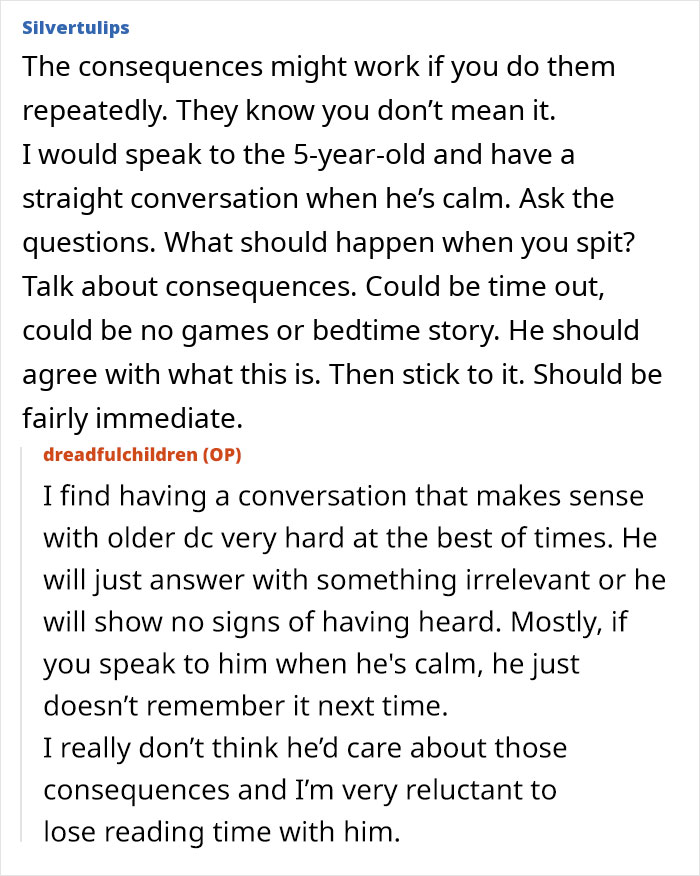
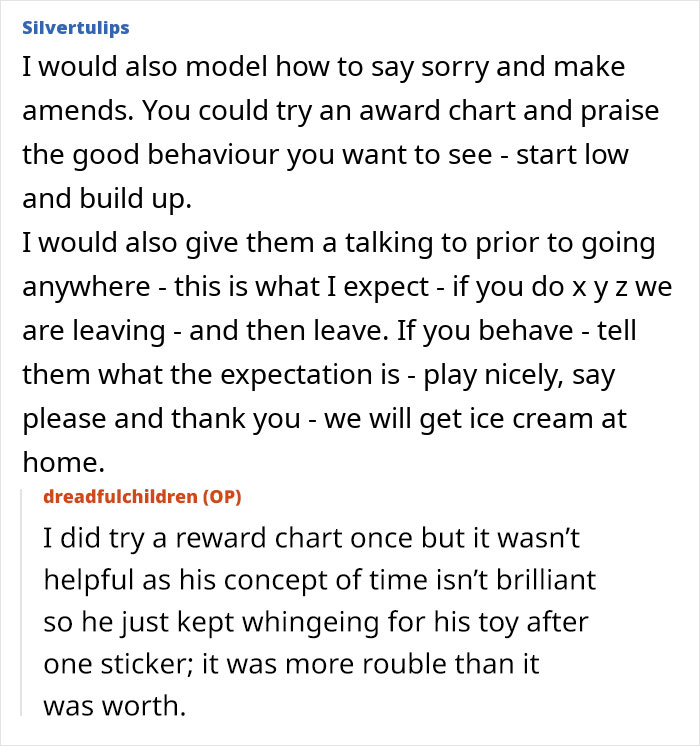
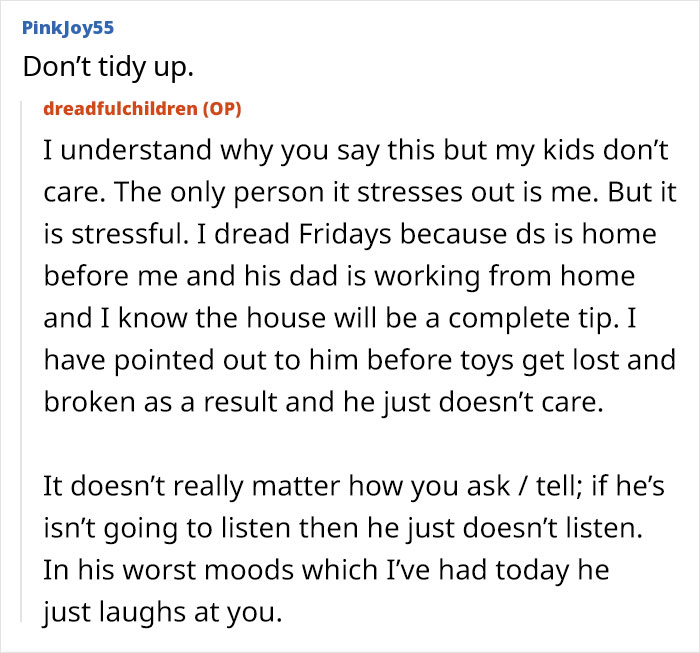
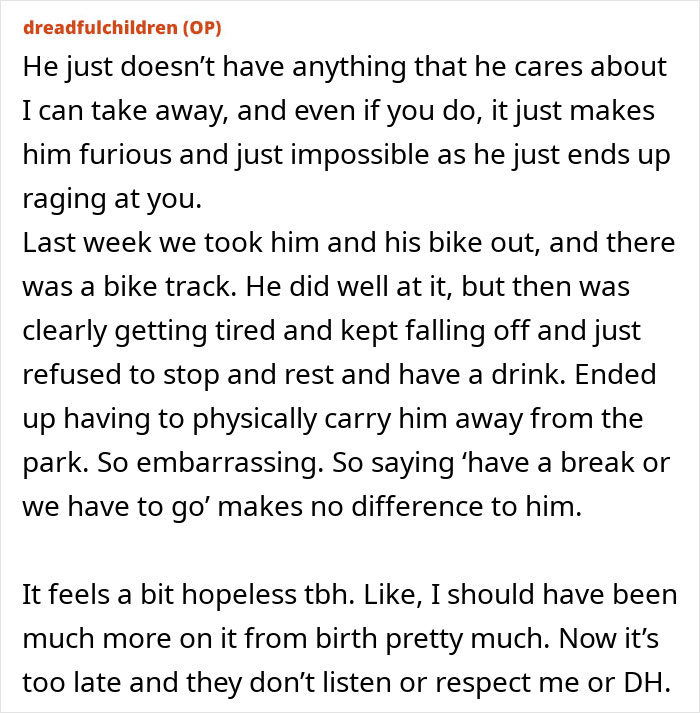
Image credits: dreadfulchildren
Image credits: RDNE Stock project / Pexels (not the actual photo)
No one really says that parenting is a walk in the park. Most people probably expect it to be hard. But just because raising children comes with a well known list of challenges does not make the weight of it any lighter when you are living it every day.
Research shows just how heavy that load can be. According to a 2022 survey by the Parenting Research Centre, three in five parents said they do nothing to truly relax and recharge. Nearly half felt they never had enough time to get everything done, two in three reported not getting enough sleep, and one in five described parenting as very or extremely frustrating.
With that in mind, it is not hard to see why the woman at the center of this story felt so lost dealing with her “unpleasant” children. Occasional tantrums and defiance already stretch a parent thin. But when those moments turn into constant chaos, it can start to feel impossible to cope.
While every child is different and professional guidance is always best, experts agree there are a few practical ways parents can respond to disrespectful behavior. Licensed clinical social worker Amy Morin shared several of these strategies with Parents.com.
One of the first steps is learning when to ignore minor attention-seeking behavior. Morin explains that selective ignoring can be one of the most effective consequences when used correctly.
If a child rolls their eyes or mutters under their breath, engaging in a power struggle often only delays the task you are trying to get done. Instead, parents can calmly restate the expectation and outline what will happen next.
The key is to address the disrespect later, when everyone is calm. As Morin suggests, saying something like, “Earlier you rolled your eyes when I asked you to clean up. Do you realize you do that when you are upset?” can open the door to a more productive conversation.
When ignoring is not enough, it may be time to look deeper. Behavior is often a form of communication. Disrespect can signal frustration, a lack of social skills, or even a need for more connection. That does not mean dropping all boundaries. But Morin notes that setting aside even a short daily window for one-on-one time can sometimes reduce acting out that stems from feeling unseen.
Another helpful tool is using clear “when and then” statements. Instead of focusing on what a child cannot do, this approach shows them how positive behavior leads to positive outcomes. For example, “When you lower your voice and talk calmly, then I will answer you.” The American Academy of Pediatrics supports this method because it gives children control over the outcome while reinforcing respectful communication.
Giving kids the chance to try again is also powerful. If a child demands something rudely, a simple, “Can you try that again?” encourages them to rethink their tone without turning the moment into a lecture. Younger children can be prompted with gentle reminders such as, “I can only hear your kind voice.”
Experts also stress the importance of choosing which behaviors to focus on first. When everything feels like a problem, parents can quickly become discouraged. Prioritizing safety and physical aggression before smaller etiquette issues can make behavior management feel more manageable.
Immediate consequences can also help reinforce boundaries. Whether it is a calm-down space for a younger child or a clear verbal boundary with an older one, the response should be timely and proportional. Morin advises parents to firmly state, “I will not allow disrespectful language in this home,” while staying calm and consistent.
In some situations, restitution can be especially effective. If a child hurts someone or damages property, repairing the harm teaches accountability in a meaningful way. Fixing what was broken or helping the person they hurt shows that words and actions have real consequences beyond a simple apology.
Finally, Morin reminds parents that discipline means to teach. Sometimes, the most surprising response to disrespect is warmth. A hug or a moment of reassurance after a conflict can lower defenses and make children more receptive to learning better behavior moving forward.

By entering your email and clicking Subscribe, you're agreeing to let us send you customized marketing messages about us and our advertising partners. You are also agreeing to our Privacy Policy.
Thank you! You've successfully subscribed to newsletters!


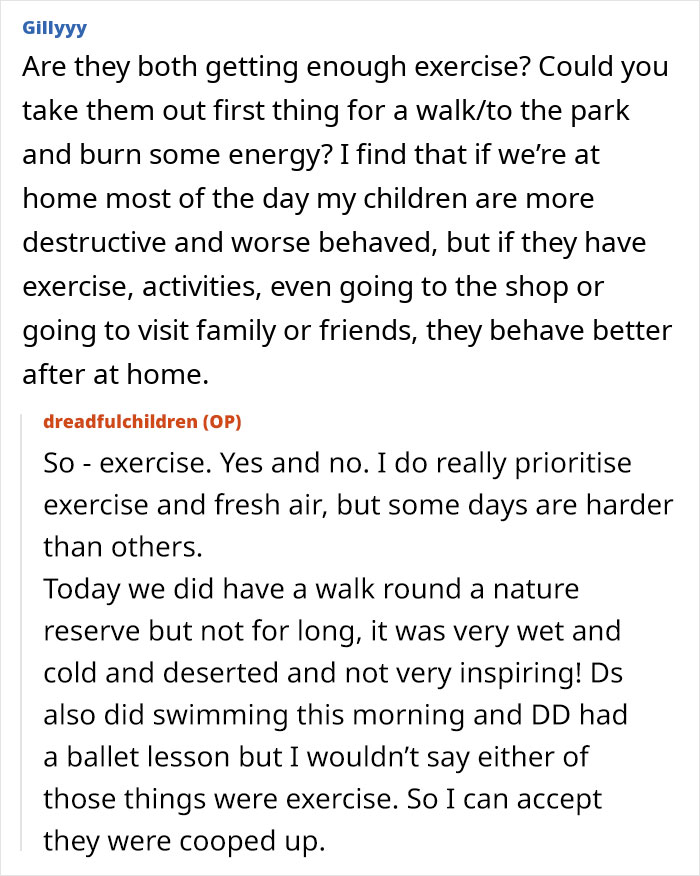
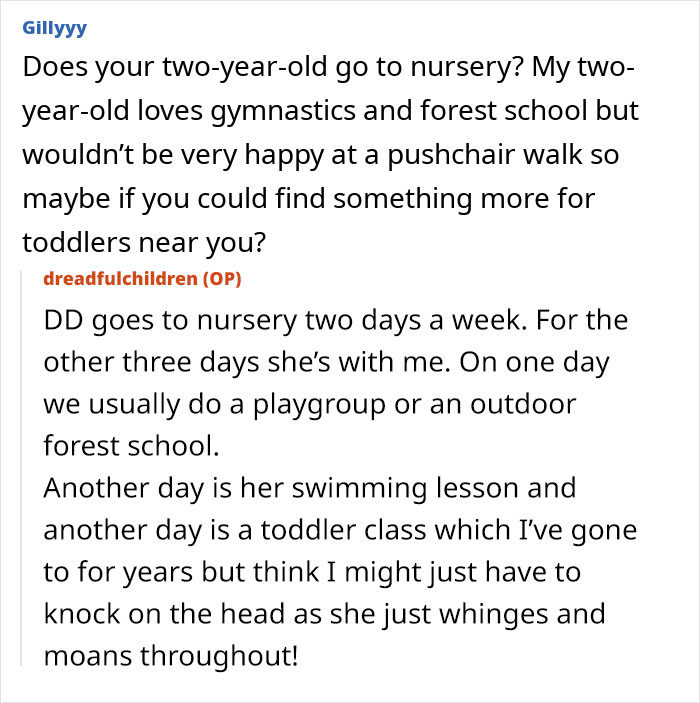
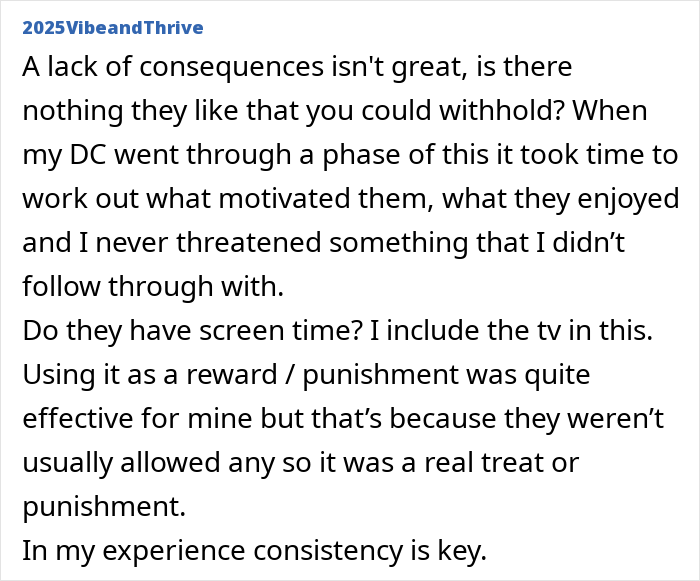
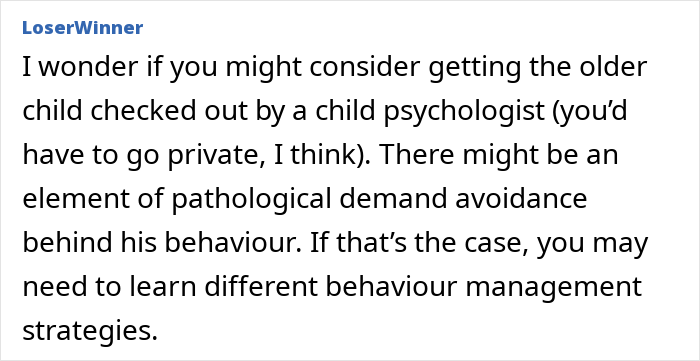
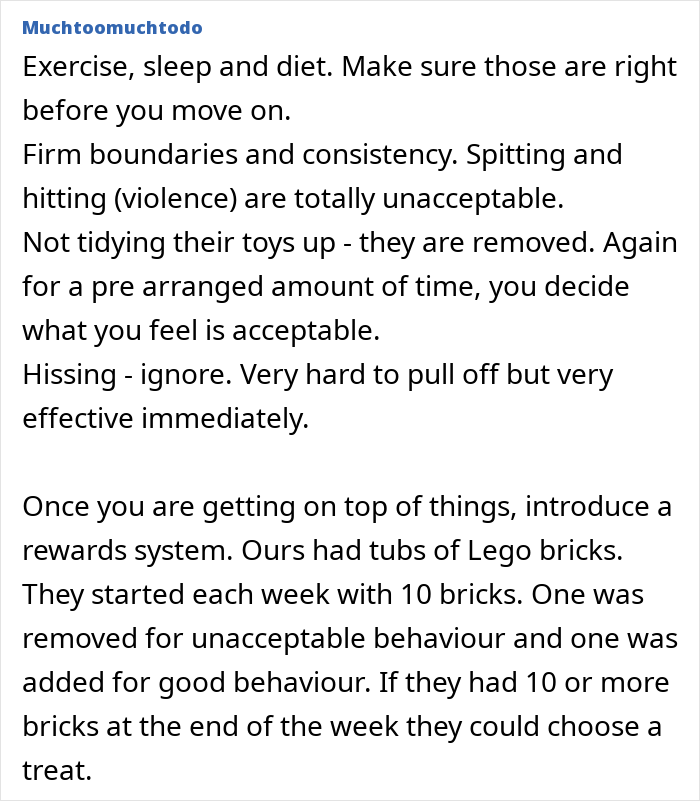
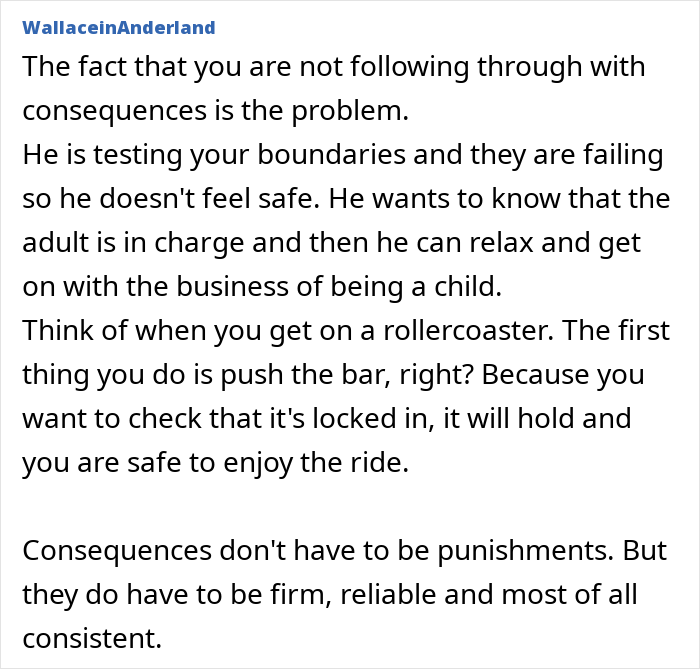
I'm kind of confused about most of the Reddit answers to OP's question. Like change the diet, do 3 exercises with the kids, yes they are ND. What happens to parenting?!!! Those two kids are absolutely normal! They just never got some boundaries. It is delusional to try to talk to a 2 or 5 year old like you would do to a preteen or teenager (and even then it sometimes doesn't work). Do parents nowadays really think that they can discuss unwanted behaviour of their little child with that child?!!! Children brains aren't fully developed. Sometimes they can act like nasty, little savages! And you'll have to adress them as such in such a moment. No negotiation or explaining. Clear consequences. (When they've calmed down, then you can talk and explain and negotiate). This had worked wonders with kids growing up in the last decades. Just because we are nowadays more aware of boundaries doesn't mean that a toddler or 5 year old cares about those or political correctness!

Parents need to understand that there's a difference between not using corporal punishment and not using any form of physical correction or restraint. A time out for a five-year-old should be five minutes maximum, and if it requires leading him firmly back to his place or physically preventing him from trashing stuff then that's what you have to do. Over and over again until it sticks. It isn't about being harsh, or mean, or angry, just firm and calm and meeting their escalation with de-escalation.
Load More Replies...
Yes, that's what happens to children when there are no consequences for bad behaviour. Those consequences don't need to involve any form of corporal punishment, a***e, etc. However, they do need to exist (perhaps "timeout" etc), and you must follow through with them. You're not negotiating with a child. It is absurd to think that children so young have the capacity to understand their behaviour on the same level as you do. That's something you have to 'teach' them...and that clearly isn't happening.

So... I don't have human children, but I've been around enough cousins, friends' children, and have read enough Mumsnet posts and Reddit threads that, to me, these sound like a fairly typical 2-year-old and 5-year-old. OP is leaping to "they must be neurodivergent!!!!!" as an "explanation". And the whole "my 5-year-old spits, I don't know where he got that from as neither my husband or I do that!" - as if a behavior like spitting is somehow genetic. XD

Agreed. They are just being feral. Look, i love my cat. But sometimes she can be a demanding little shyte. Then I have to yell, or oush her off the couch. It is tough because she gives me a hangdog look and goes sulk. But sometimes you just gotta be tough. Same with kids.
Load More Replies... I'm kind of confused about most of the Reddit answers to OP's question. Like change the diet, do 3 exercises with the kids, yes they are ND. What happens to parenting?!!! Those two kids are absolutely normal! They just never got some boundaries. It is delusional to try to talk to a 2 or 5 year old like you would do to a preteen or teenager (and even then it sometimes doesn't work). Do parents nowadays really think that they can discuss unwanted behaviour of their little child with that child?!!! Children brains aren't fully developed. Sometimes they can act like nasty, little savages! And you'll have to adress them as such in such a moment. No negotiation or explaining. Clear consequences. (When they've calmed down, then you can talk and explain and negotiate). This had worked wonders with kids growing up in the last decades. Just because we are nowadays more aware of boundaries doesn't mean that a toddler or 5 year old cares about those or political correctness!
Parents need to understand that there's a difference between not using corporal punishment and not using any form of physical correction or restraint. A time out for a five-year-old should be five minutes maximum, and if it requires leading him firmly back to his place or physically preventing him from trashing stuff then that's what you have to do. Over and over again until it sticks. It isn't about being harsh, or mean, or angry, just firm and calm and meeting their escalation with de-escalation.
Load More Replies... Yes, that's what happens to children when there are no consequences for bad behaviour. Those consequences don't need to involve any form of corporal punishment, a***e, etc. However, they do need to exist (perhaps "timeout" etc), and you must follow through with them. You're not negotiating with a child. It is absurd to think that children so young have the capacity to understand their behaviour on the same level as you do. That's something you have to 'teach' them...and that clearly isn't happening.
So... I don't have human children, but I've been around enough cousins, friends' children, and have read enough Mumsnet posts and Reddit threads that, to me, these sound like a fairly typical 2-year-old and 5-year-old. OP is leaping to "they must be neurodivergent!!!!!" as an "explanation". And the whole "my 5-year-old spits, I don't know where he got that from as neither my husband or I do that!" - as if a behavior like spitting is somehow genetic. XD
Agreed. They are just being feral. Look, i love my cat. But sometimes she can be a demanding little shyte. Then I have to yell, or oush her off the couch. It is tough because she gives me a hangdog look and goes sulk. But sometimes you just gotta be tough. Same with kids.
Load More Replies...































 No fees, cancel anytime
 then open in external browser


 and click "Open in External Browser"



















27
49