Get Premium
Dark mode theme is available exclusively for premium users. Learn more about the benefits of subscribing.
No fees, cancel anytime.

 Dark Mode Ad-Free Browsing Unlimited Content
 Ad-Free Browsing Unlimited Content Dark Mode
Join 1.2 million Panda readers who get the best art, memes, and fun stories every week!
40submissions
Finished

Oscar Wilde once said: "We are all in the gutter, but some of us are looking at the stars." I guess I would be that person who's always searching for the beauty in life no matter the circumstances. And what would be more fascinated and more magical than a night sky full of stars?
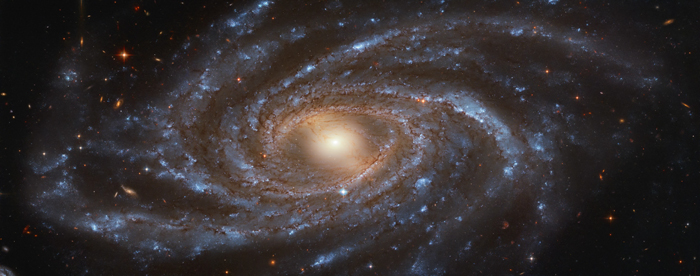
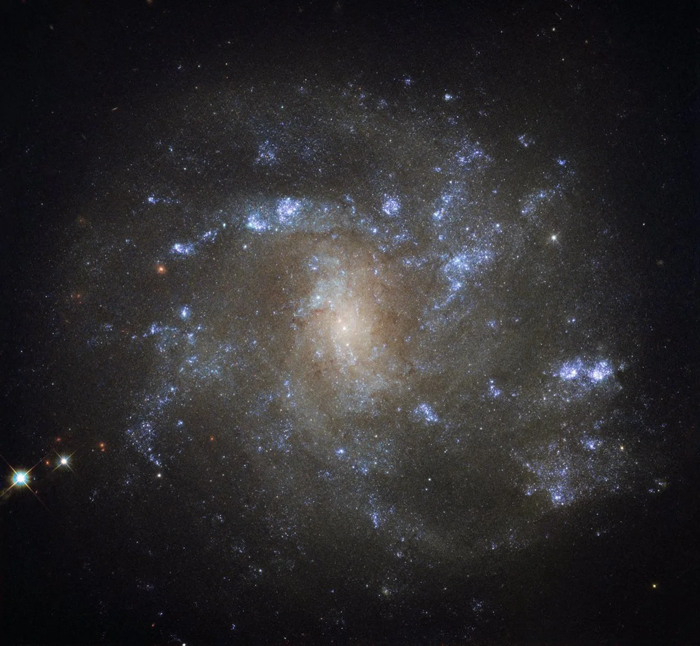
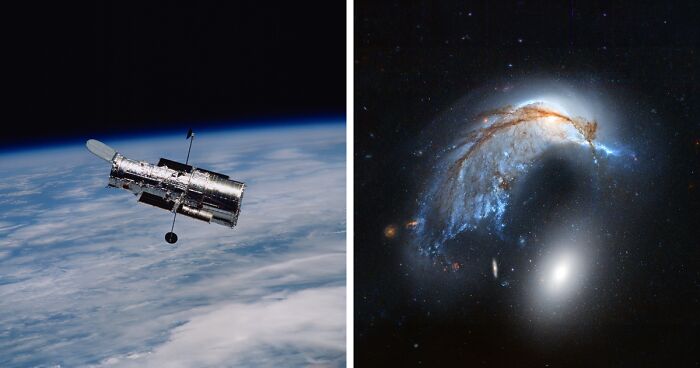
The Hubble Space Telescope launched into low Earth orbit in 1990s unveiled vast cosmic islands in the endless wild ocean of the universe, and here are some of the most beautiful ones.
This post may include affiliate links.
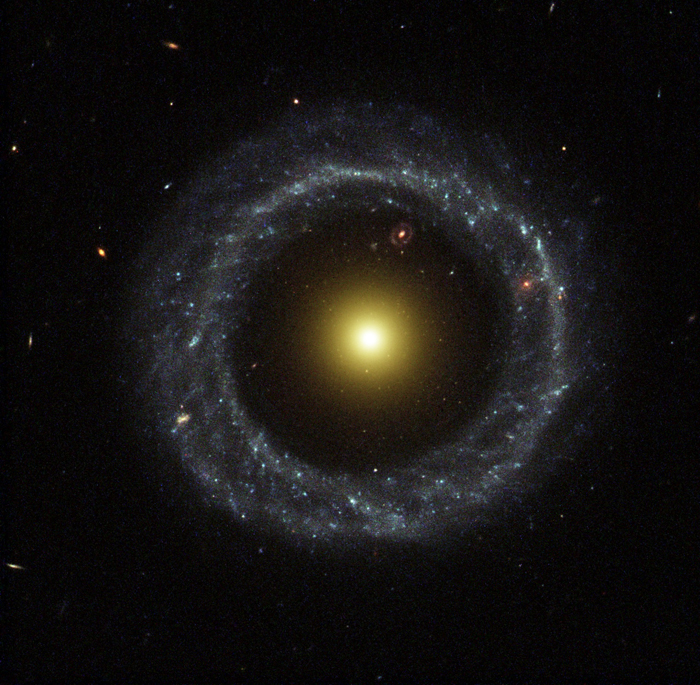
Hoag's Object is an unusual ring galaxy in the constellation of Serpens Caput. It is identified as either a planetary nebula or a peculiar galaxy. The galaxy has approximately eight billion stars, and is roughly 120,000 light-years across.
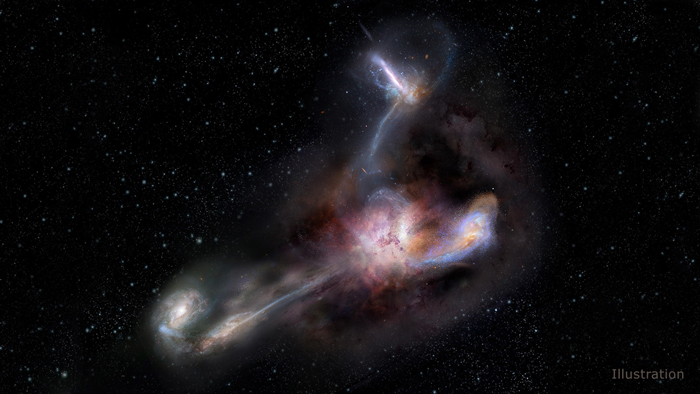
W2246-0526 is the most luminous galaxy ever discovered that is cannibalizing not one, not two, but at least three smaller galaxies, which could explain its extreme brightness.
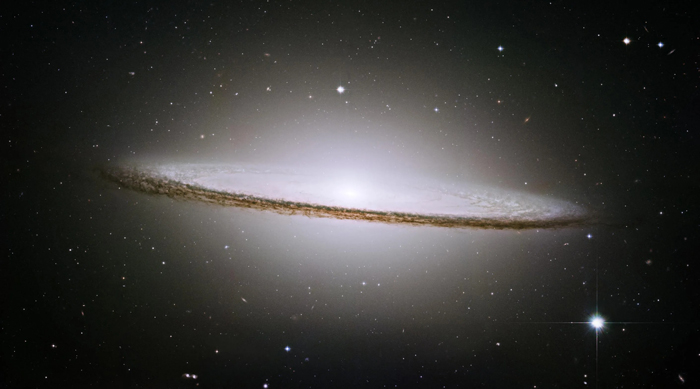
The Sombrero galaxy is a peculiar galaxy of unclear classification in the constellation borders of Virgo and Corvus and located around 28 million light-years away from Earth.
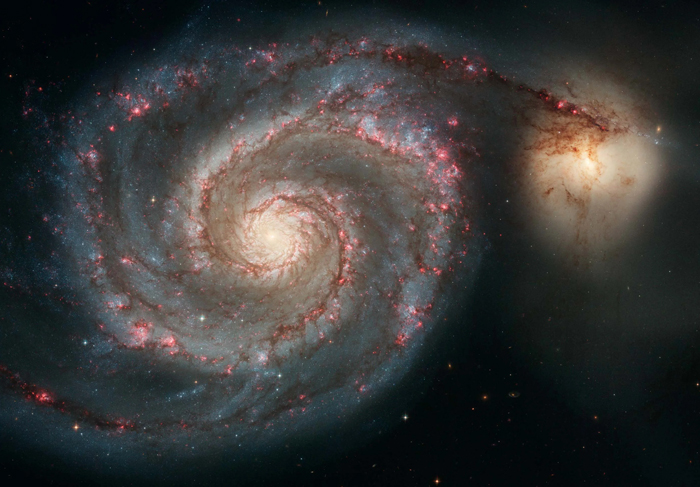
The Whirlpool Galaxy, also known as Messier 51a (M51a) or NGC 5194, is an interacting grand-design spiral galaxy with a Seyfert 2 active galactic nucleus. It lies in the constellation Canes Venatici and was the first galaxy to be classified as a spiral galaxy.
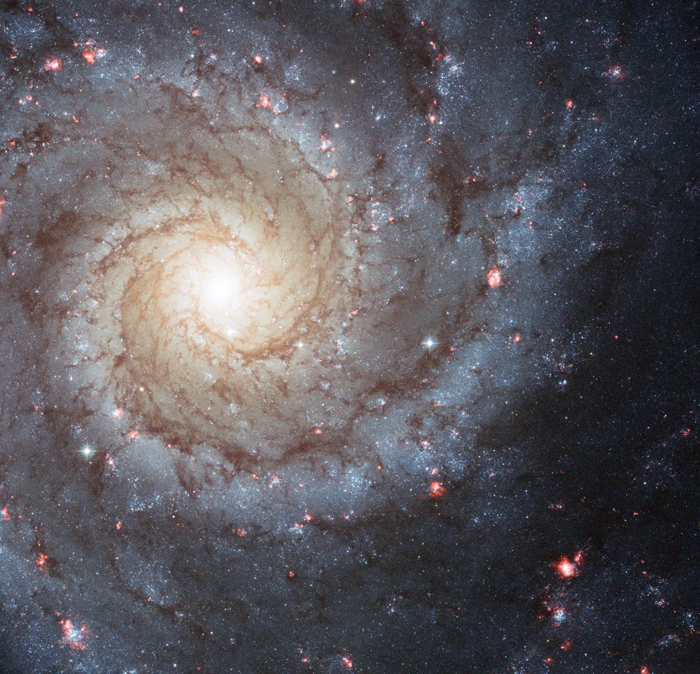
Phantom Galaxy or Messier 74 is a spiral galaxy in the constellation of Pisces and smaller than our own galaxy.
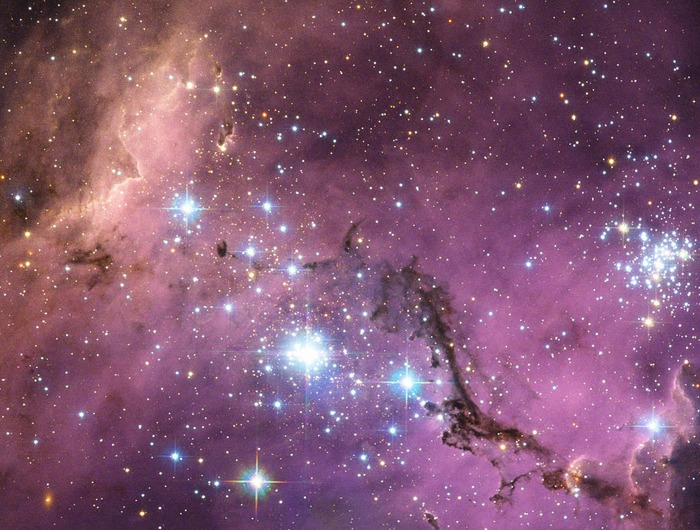
Large Magellanic Could is a spiral satellite galaxy of the Milky Way. It is only 160,000 light-years from Earth therefore visible to the naked eye as a faint object in the Earth's southern hemisphere located between the constellations of Dorado and Mensa.
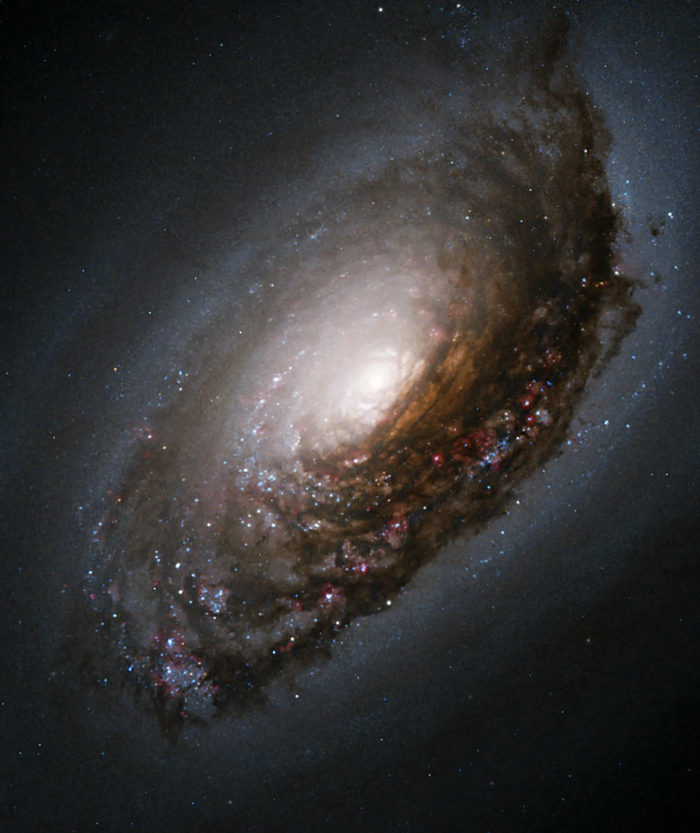
The Black Eye Galaxy is a relatively isolated spiral galaxy 17 million light-years away in the mildly northern constellation of Coma Berenices.
This galaxy is 150 million light-years away from Earth. Astronomers mentioned, that it is one of only 2 known spiral galaxies, large enough and close enough to allow detailed observations of its crowns.
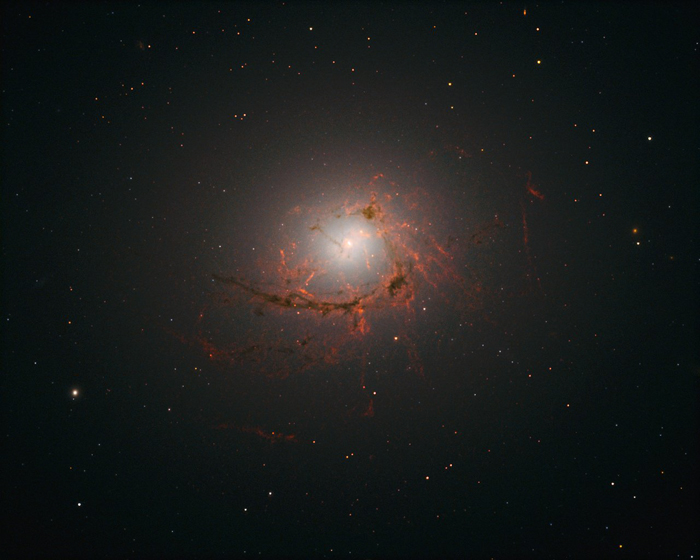
NGC 4696 is an elliptical galaxy located in the constellation Centaurus. It has a supermassive black hole that beats like a heart every 5 to 10 million years.
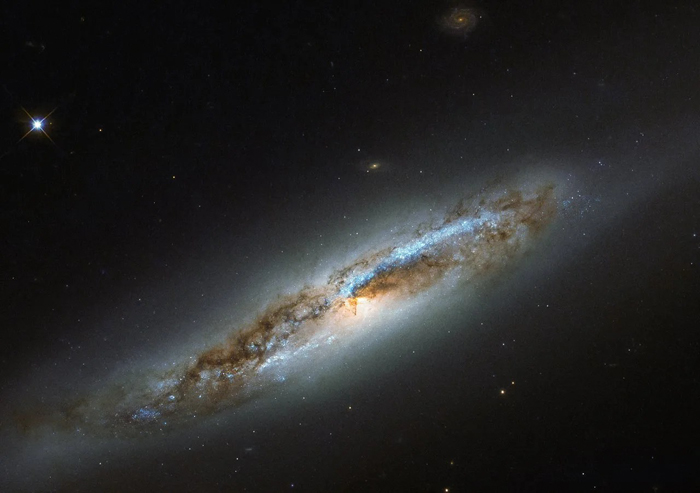
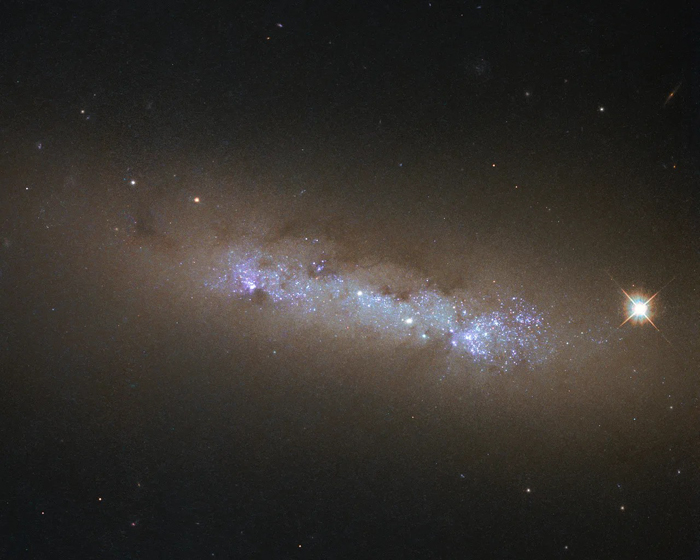
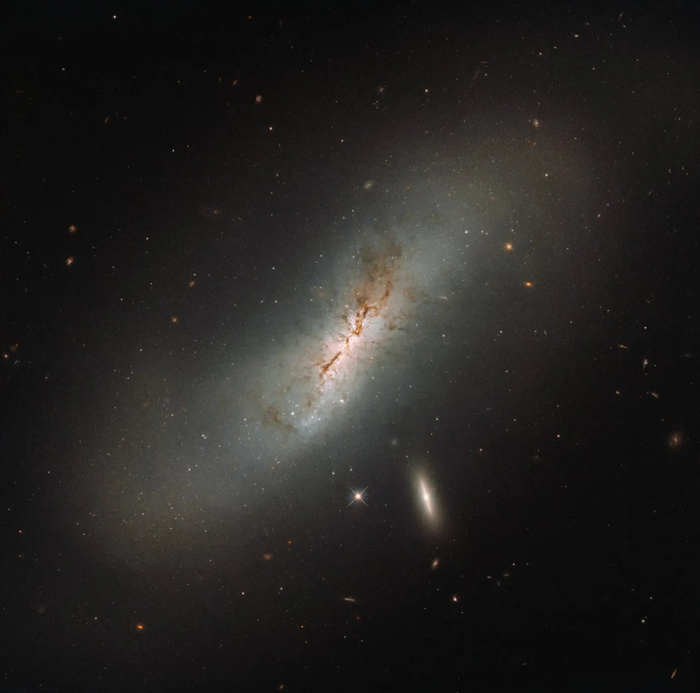
NGC 4388 is an active spiral galaxy in the equatorial constellation of Virgo and located at a distance of 57 million light-years from Earth.
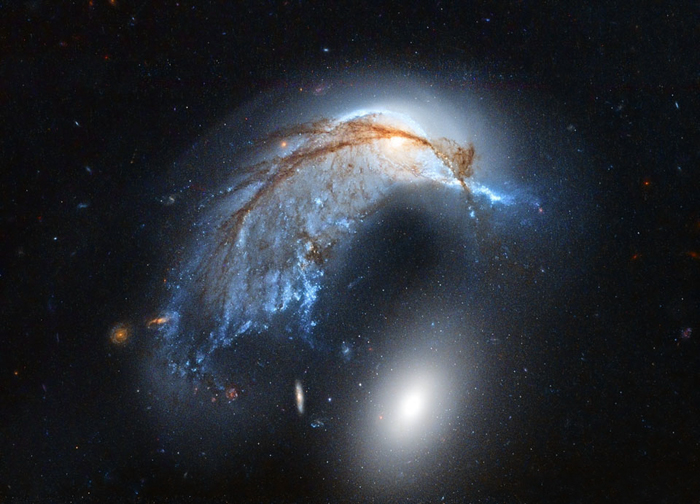
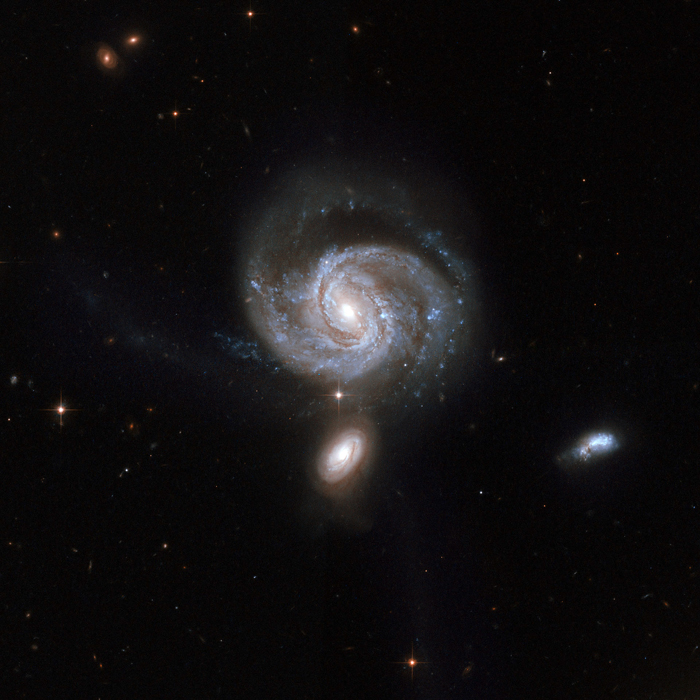
Porpoise Galaxy or NGC 2936 is an interacting spiral galaxy located at a distance of 326 million light-years, in the constellation Hydra. NGC 2936 is interacting with elliptical galaxy NGC 2937 located just beneath it.
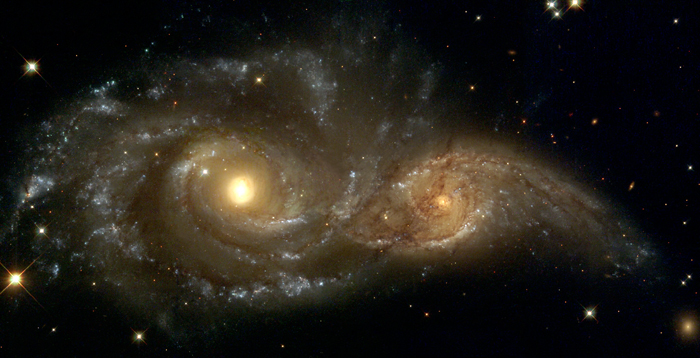
NGC 2207 and IC 2163 are a pair of colliding spiral galaxies about 80 million light-years away in the constellation Canis Major.
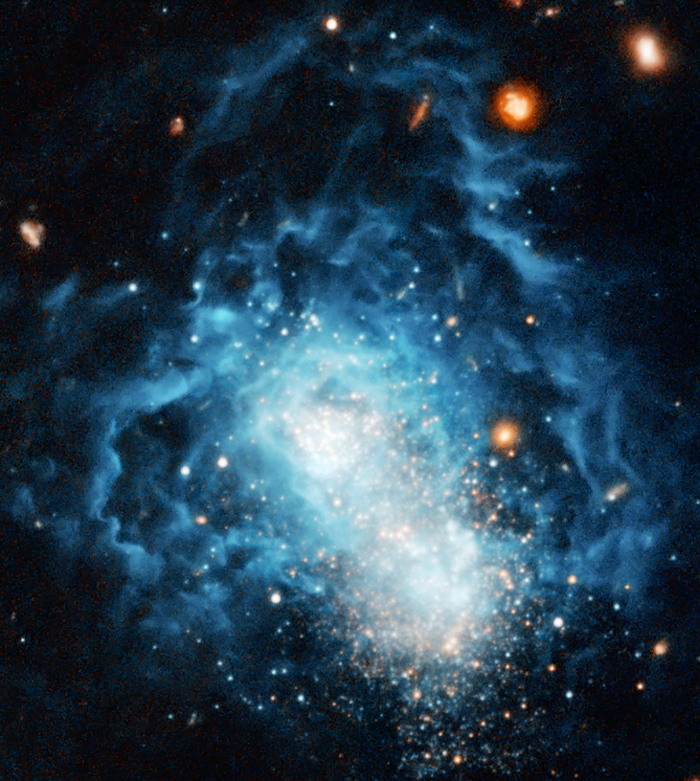
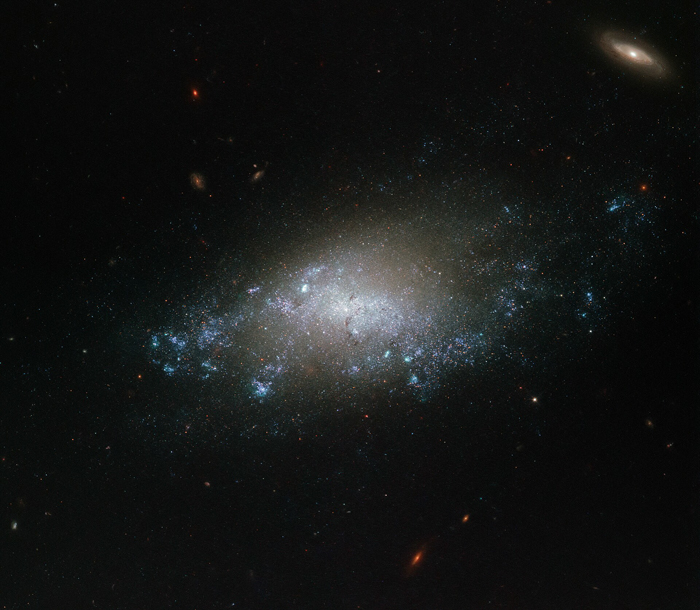
Galaxy I Zwicky 18 is a blue compact dwarf galaxy located about 59 million light-years away in the constellation Ursa Major.
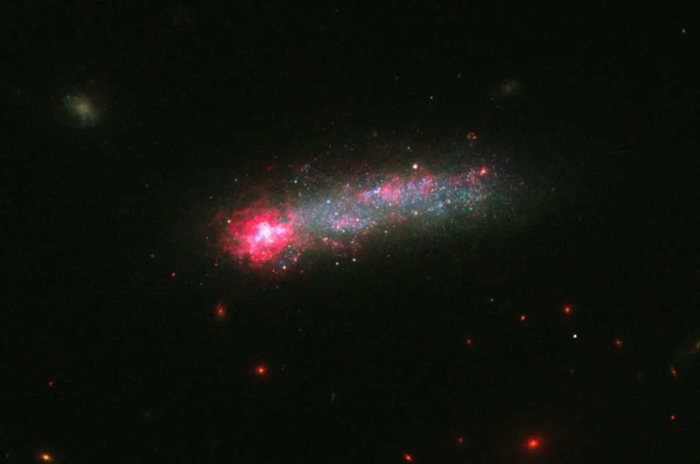
Kiso 5639 is a dwarf galaxy, member of a class of "tadpole" galaxies so named because of their bright heads and elongated tails.
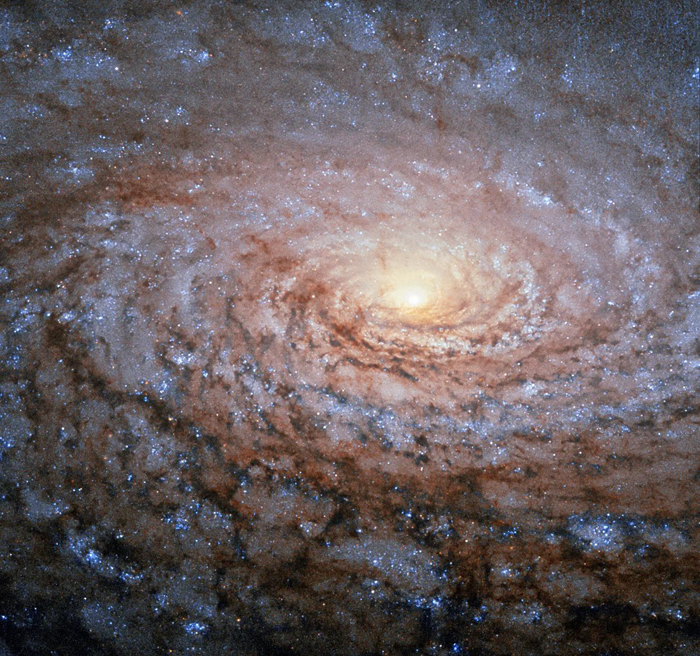
Sunflower Galaxy is a spiral galaxy in the northern constellation of Canes Venatici with approximately 400 billion stars.
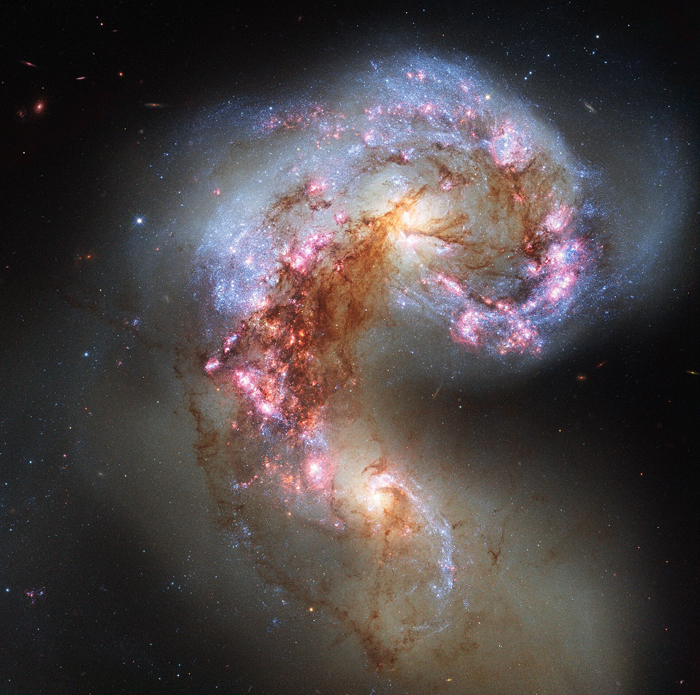
The Antennae Galaxies are a pair of interacting galaxies in the constellation Corvus. They currently going through a starburst phase, in which the collision of clouds of gas and dust, with entangled magnetic fields, causes rapid star formation.
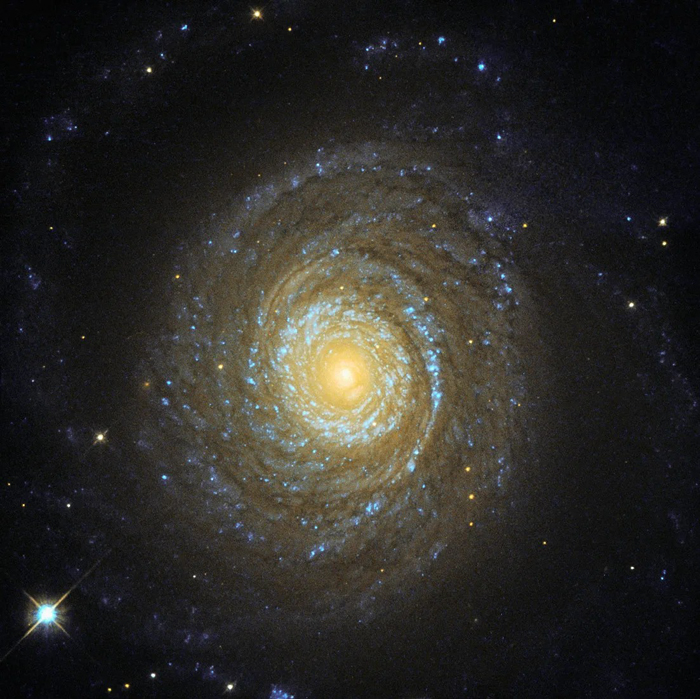
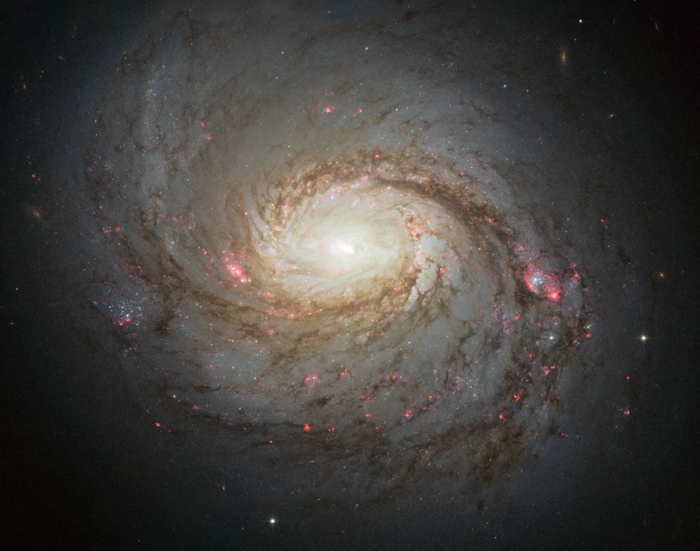
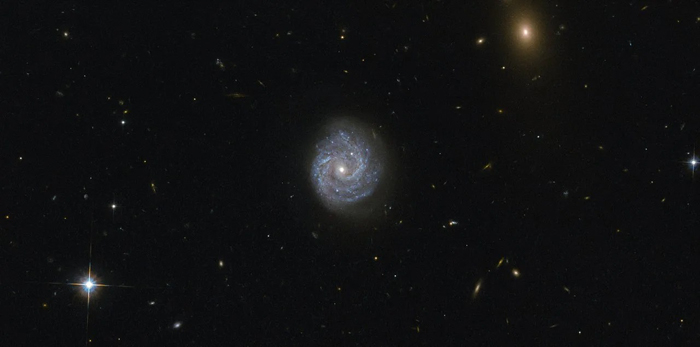
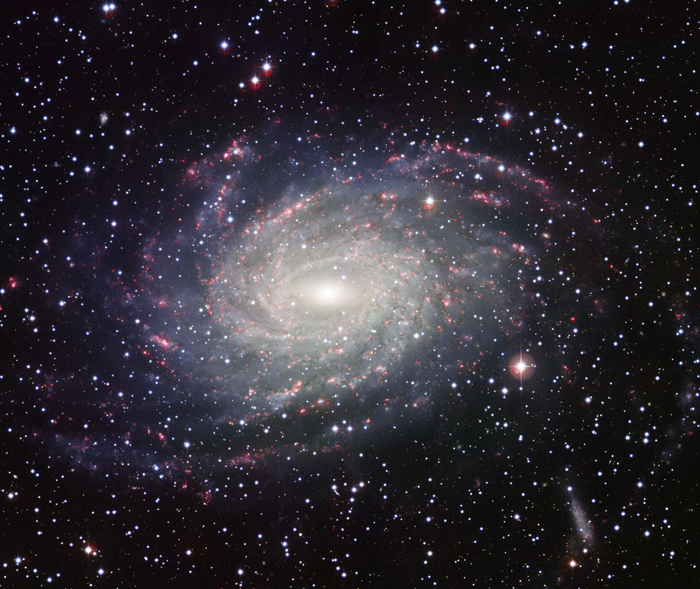
NGC 2336 is a barred spiral galaxy located in the constellation Camelopardalis. It is located at a distance of circa 100 million light-years from Earth.
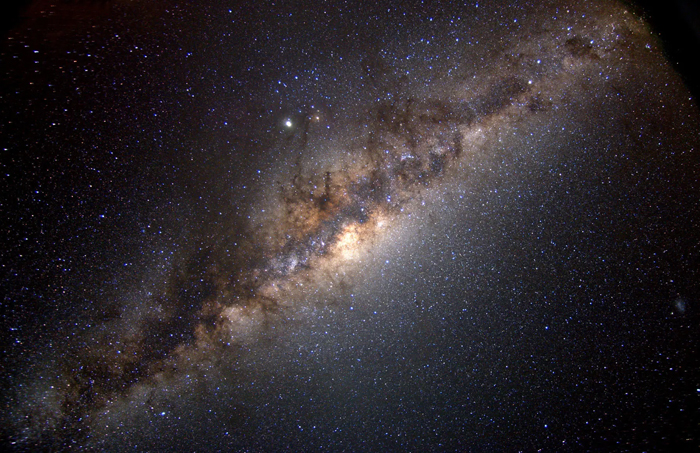
The Milky Way is a barred spiral galaxy, around 13.6 billion years old and home to our own solar system.
Messier 77, also known as NGC 1068 or the Squid Galaxy. It is a barred spiral galaxy in the constellation Cetus and about 47 million light-years away from Earth.
MACS 2129-1 is an early universe so-called 'dead' disk galaxy that lies approximately 10 billion light-years away from Earth. MACS 2129-1 has been described as 'dead' as it has ceased making new stars.
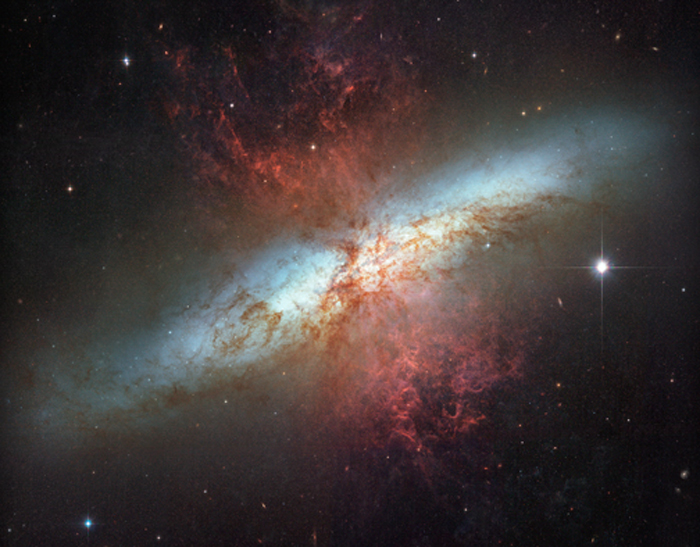
Cigar Galaxy is a starburst galaxy approximately 12 million light-years away from Earth in the constellation Ursa Major.
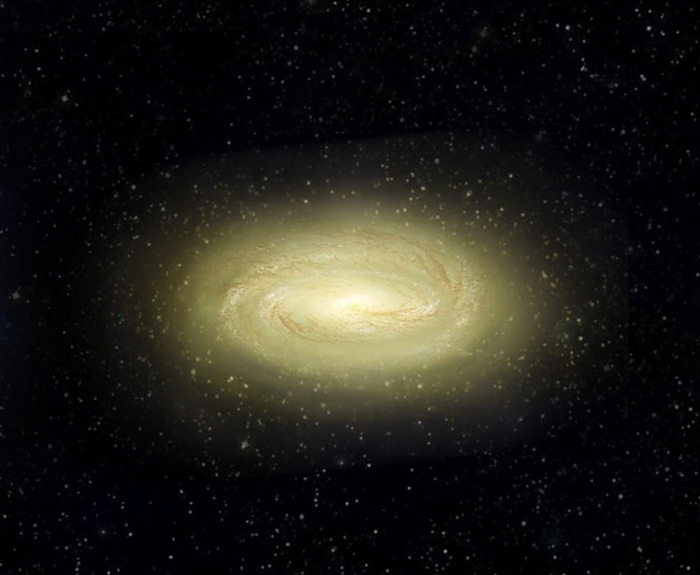
Galaxy RX J1140.1+0307 is a spiral galaxy that is centered on one of the lowest black hole masses known in any luminous galactic core.
NGC 7674 is a spiral galaxy located in the constellation Pegasus. It is located at a distance of circa 350 million light-years from Earth.
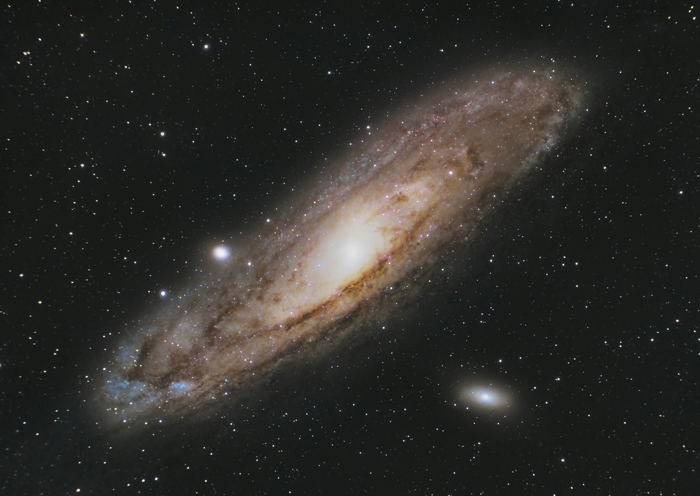
The Andromeda Galaxy is a barred spiral galaxy, the nearest major galaxy to the Milky Way and the one of the few visible to the naked eye. It is located about 2,480,000 light-years from Earth.
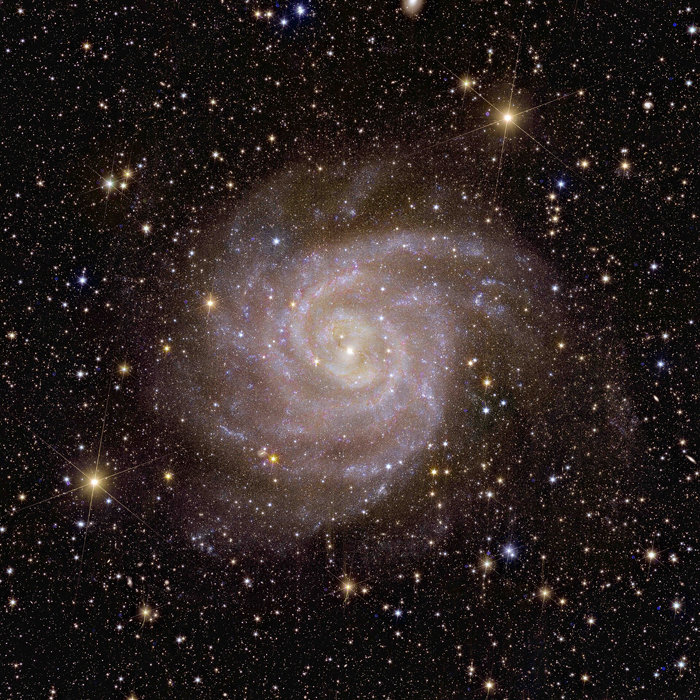
IC 342 is an intermediate spiral galaxy in the constellation Camelopardalis, located relatively close to the Milky Way.
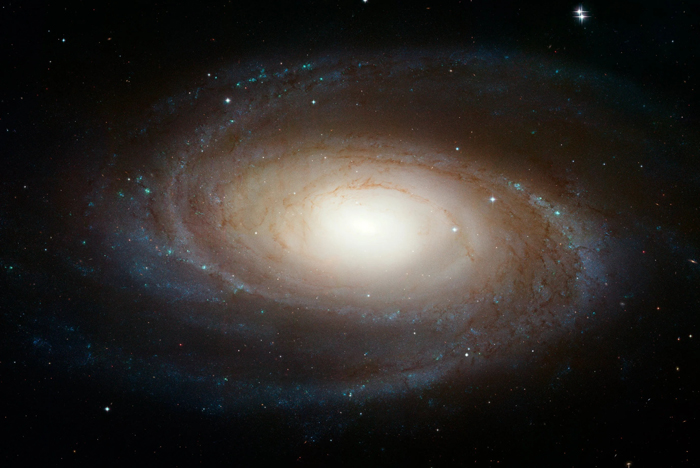
Messier 81 is a grand design spiral galaxy about 12 million light-years away in the constellation Ursa Major.
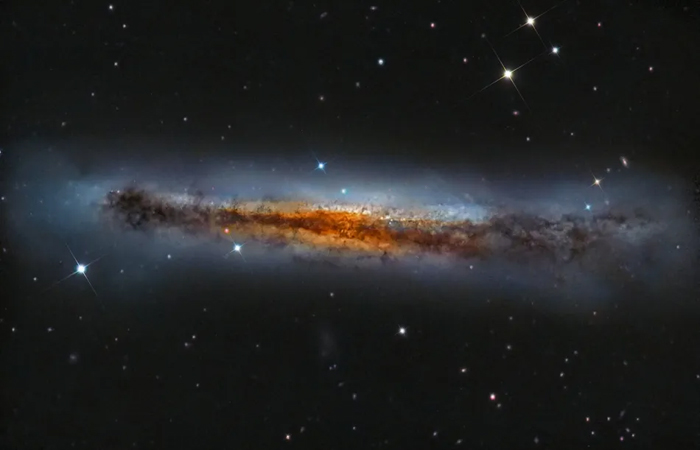
NGC 3628, also known as the Hamburger Galaxy or Sarah's Galaxy, is an unbarred spiral galaxy about 35 million light-years away in the constellation Leo.
Galaxy NGC 3274 is a relatively faint spiral galaxy that is located over 20 million light-years away in the constellation of Leo.
NGC 6744 is an intermediate spiral galaxy about 30 million light-years away in the constellation Pavo.
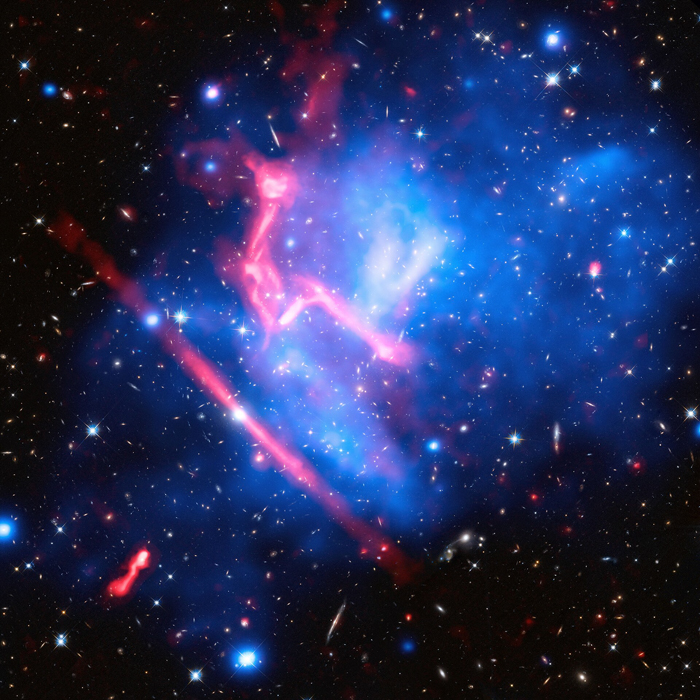
MACS J0717.5+3745 is a large galaxy cluster located 5,4 billion light-years away in the constellation Auriga, appearing in the Massive Cluster Survey.
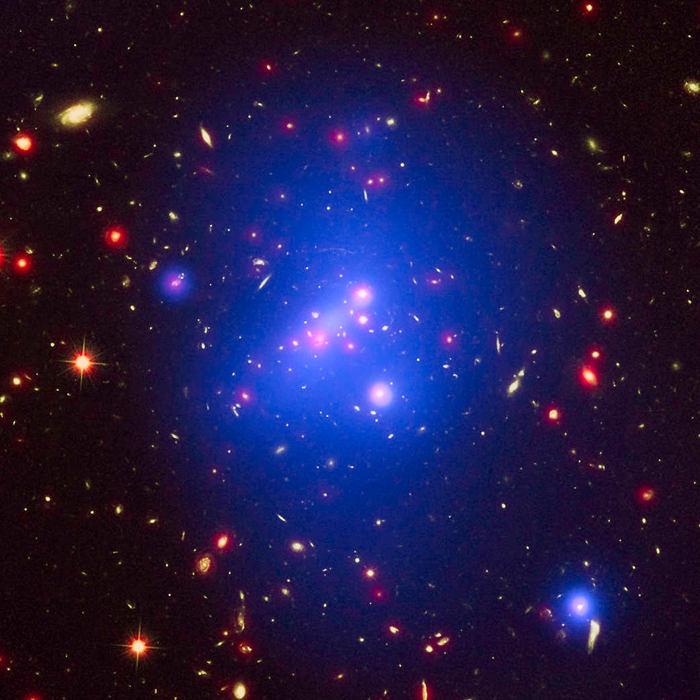
This rare galaxy cluster, which is located 10 billion light years from Earth, weighs almost 500 trillion Suns.
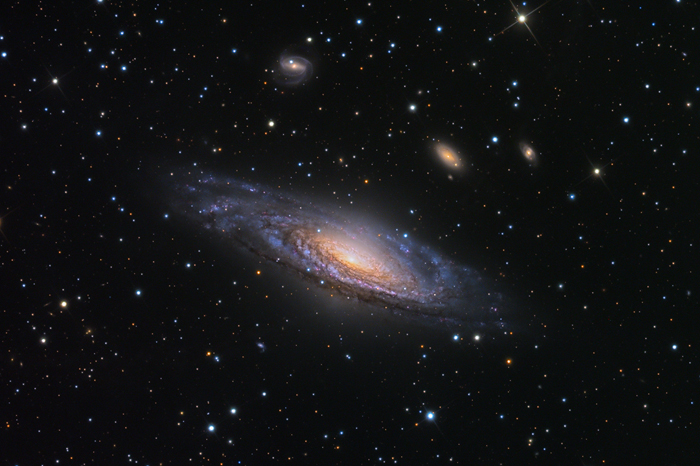
NGC 7331, also known as Caldwell 30, is an unbarred spiral galaxy about 40 million light-years away in the constellation Pegasus.
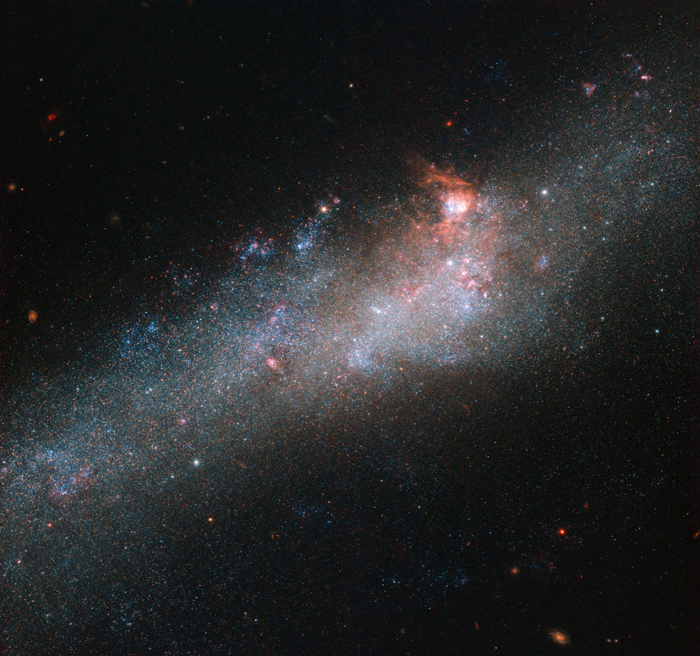
The Hockey Stick is a highly warped edge-on barred spiral galaxy located in the local universe 30 million light years away from earth in the constellation Canes Venatici.
This beautiful clump of glowing gas, dark dust, and glittering stars is the spiral galaxy NGC 4248 is located about 24 million light-years away in the constellation of Canes Venatici.
Galaxia ESO 486-21 is a spiral galaxy, with an irregular and ill-defined structure, located about 30 million light-years away from Earth in the constellation of Lynx.
NGC 4424 is a spiral galaxy located in the equatorial constellation of Virgo and 13,5 million light-years away from Earth.
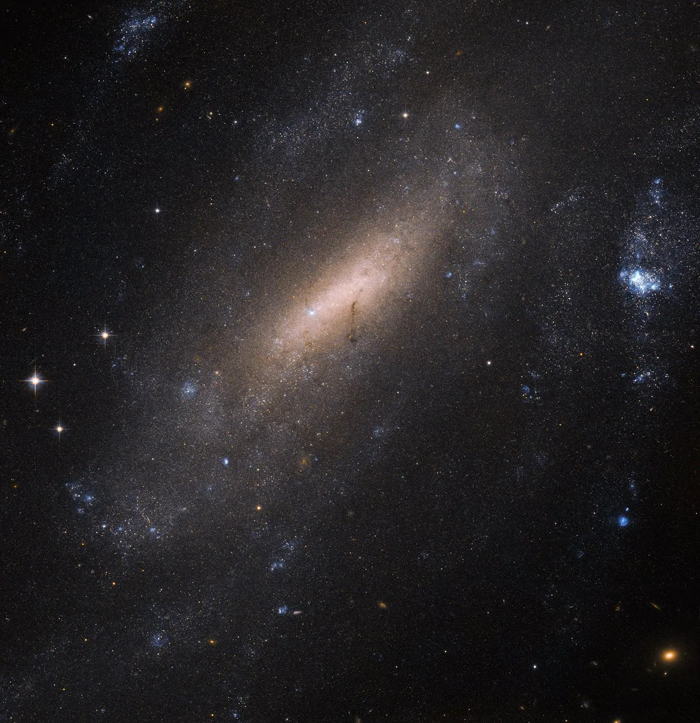
IC 5201 is a barred spiral galaxy located in the constellation Grus and about 35 million light-years from Earth.
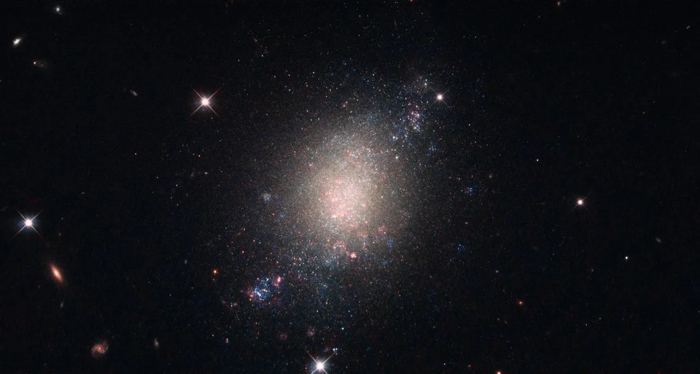
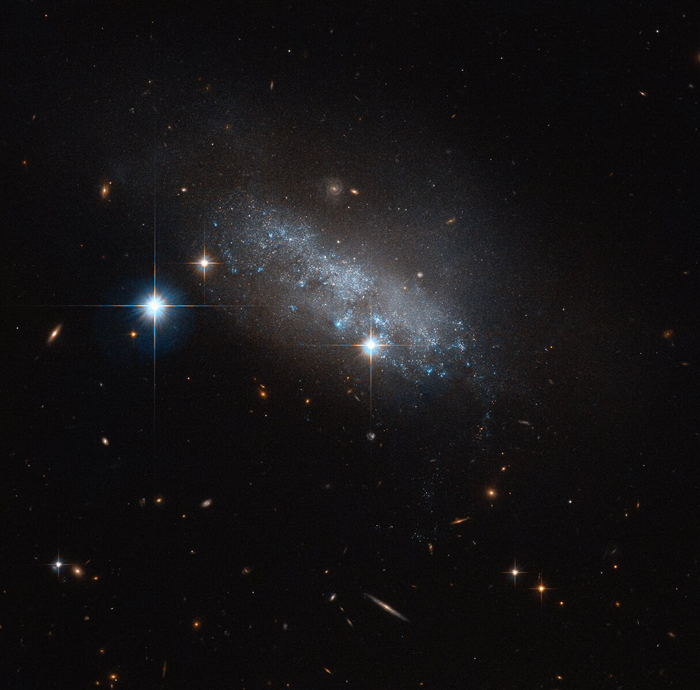
Galaxy IC 3583 is an irregular galaxy around 30 million light-years away in the constellation of Virgo.
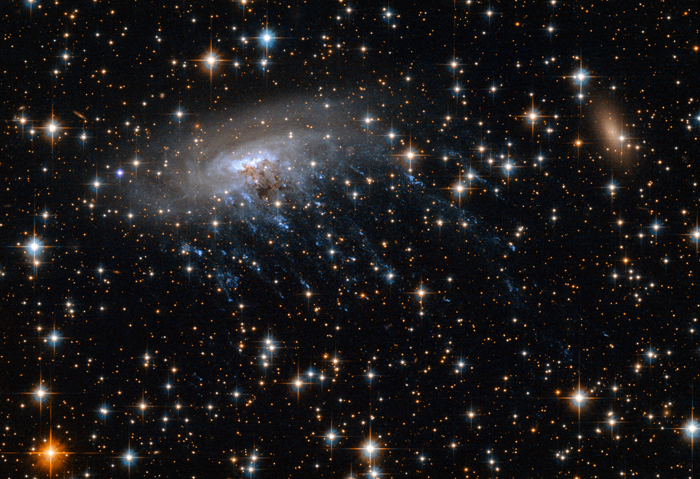
ESO 137-001 is a barred spiral galaxy located in the constellation Triangulum Australe and in the cluster Abell 3627. As the galaxy moves to the center of the cluster at 1900 km/s, it is stripped by hot gas, thus creating a 260,000 light-year long tail.








































 No fees, cancel anytime