Get Premium
Dark mode theme is available exclusively for premium users. Learn more about the benefits of subscribing.
No fees, cancel anytime.

 Dark Mode Ad-Free Browsing Unlimited Content
 Ad-Free Browsing Unlimited Content Dark Mode
Join 1.2 million Panda readers who get the best art, memes, and fun stories every week!

Moving in with your partner is a pretty big step, considering that one has to make sure to step over all the pitfalls along the way. This is why most folks will at least discuss the big picture questions beforehand.
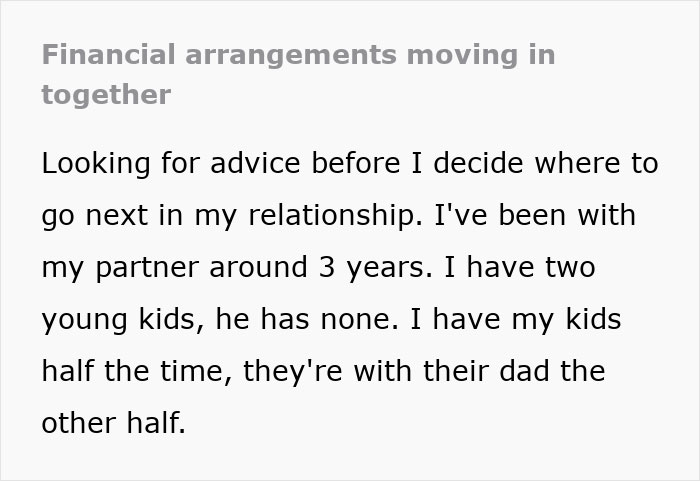
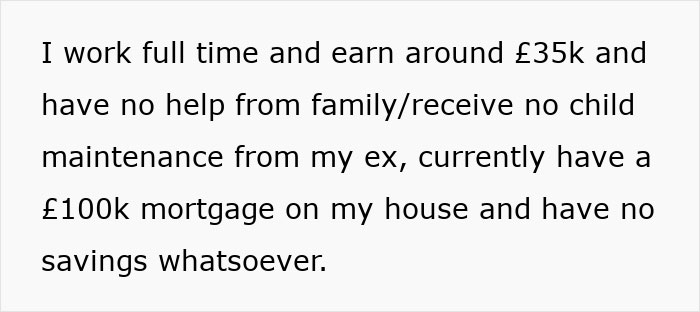
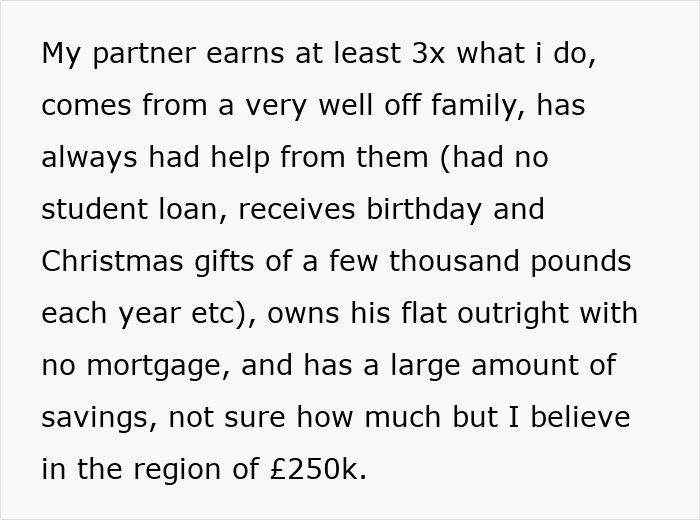
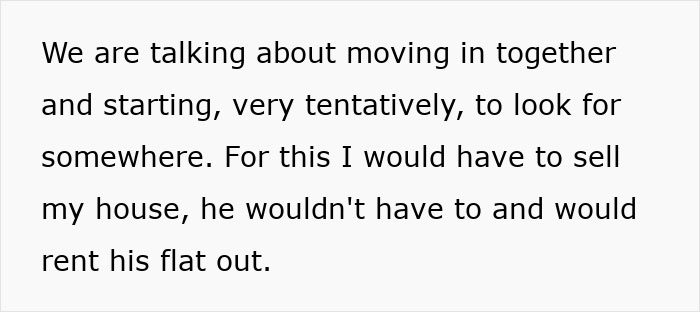
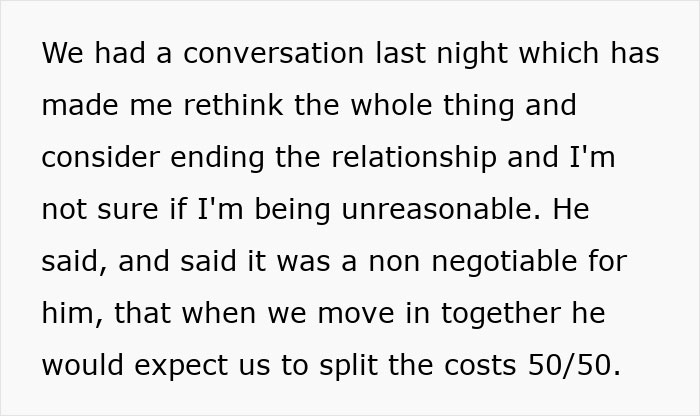
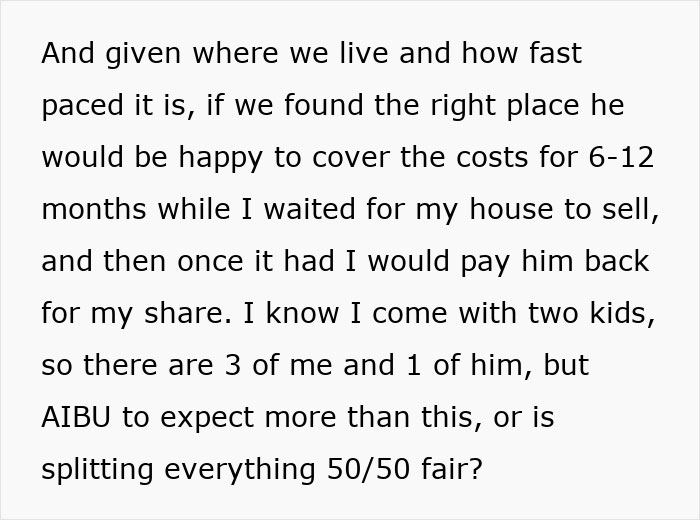
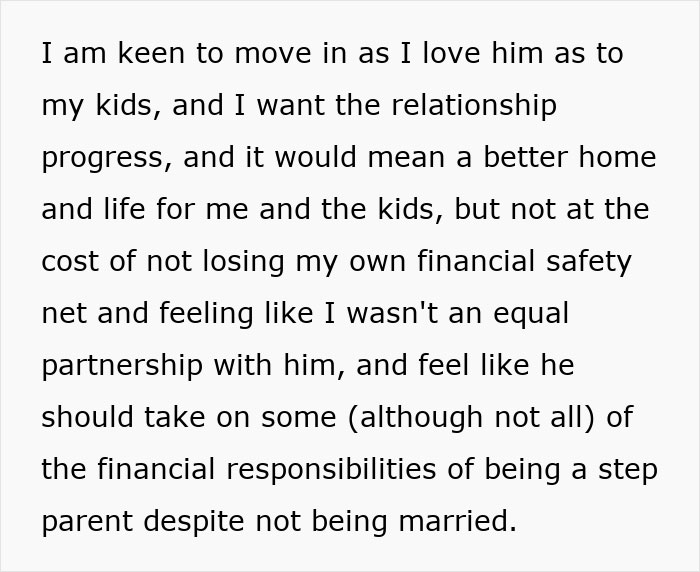
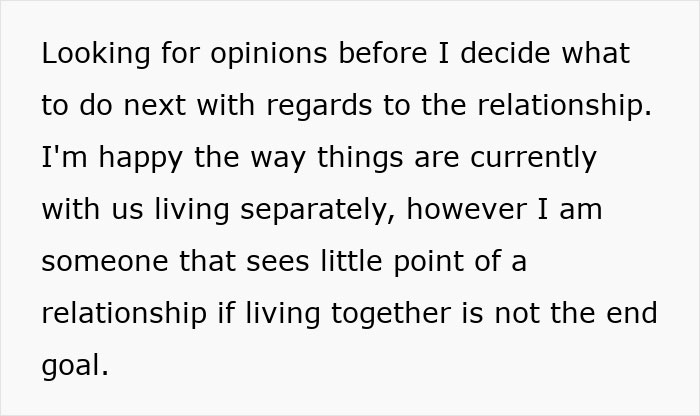
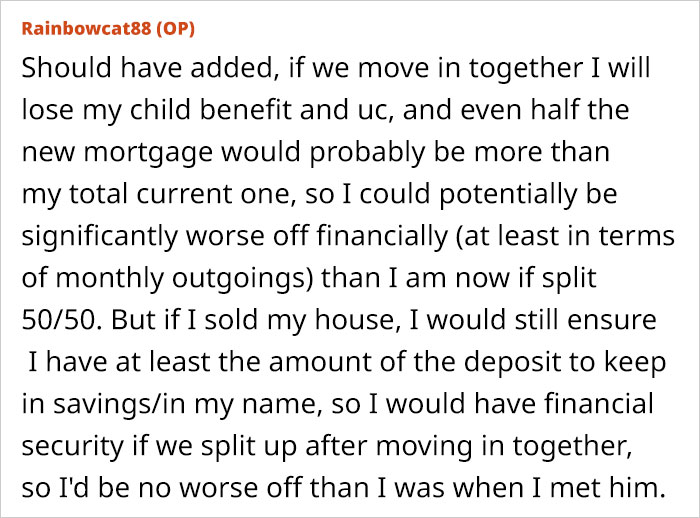
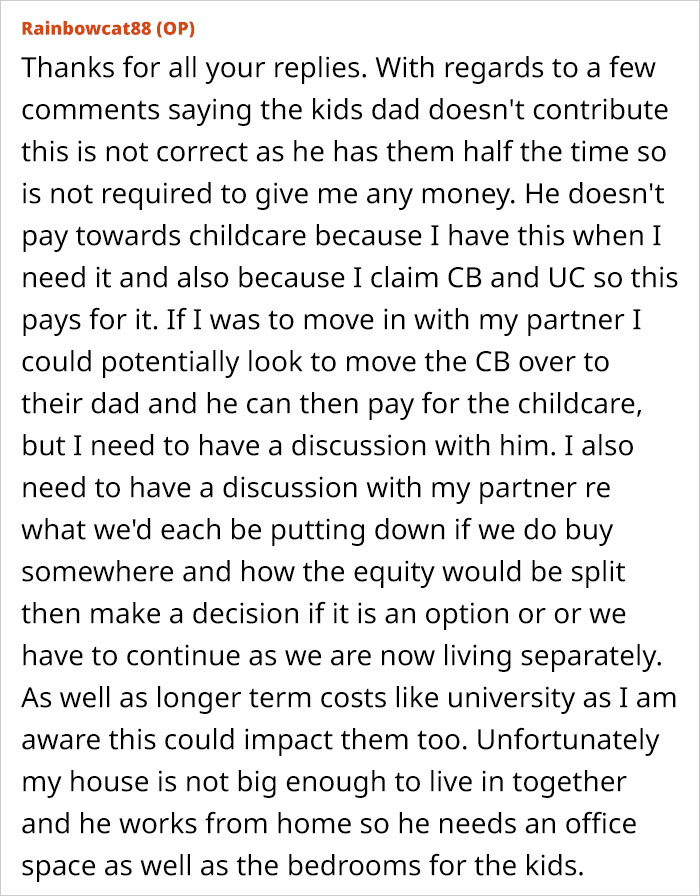
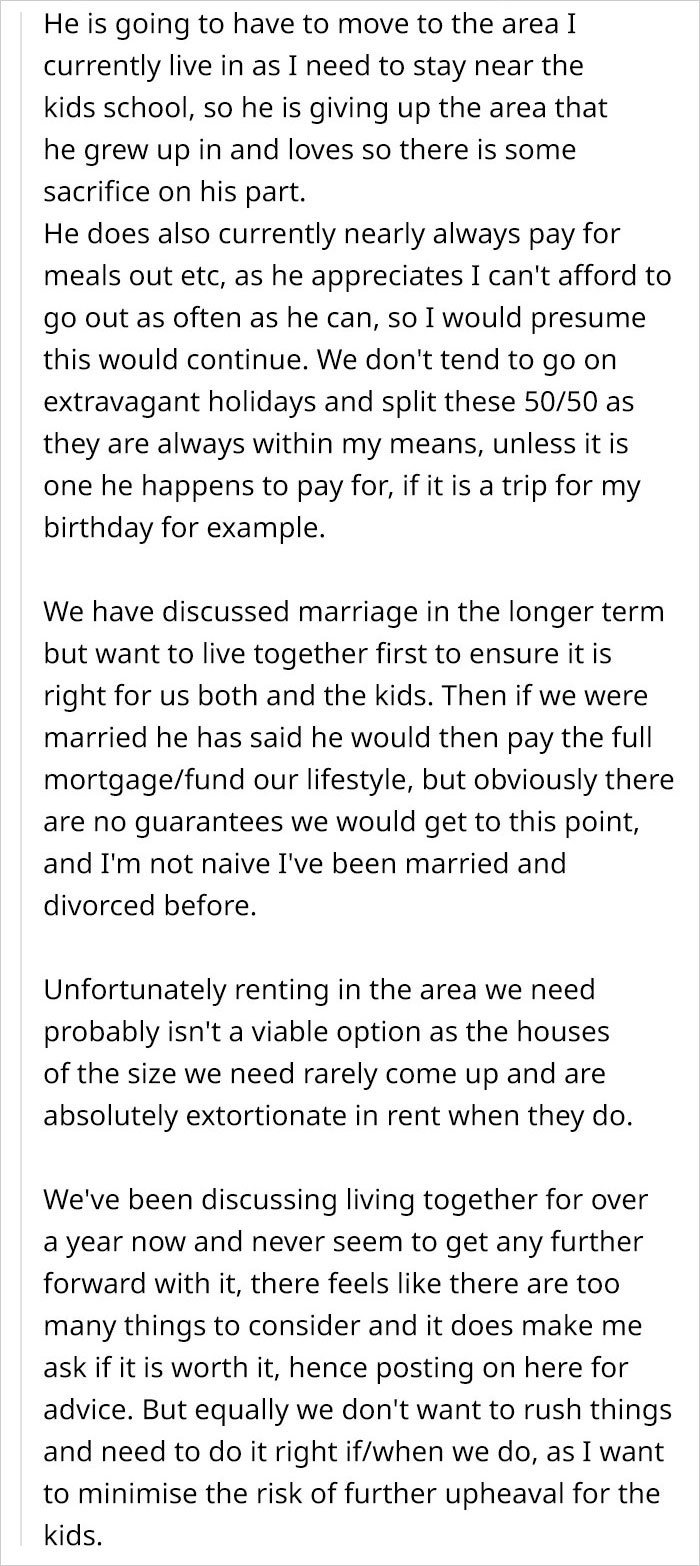
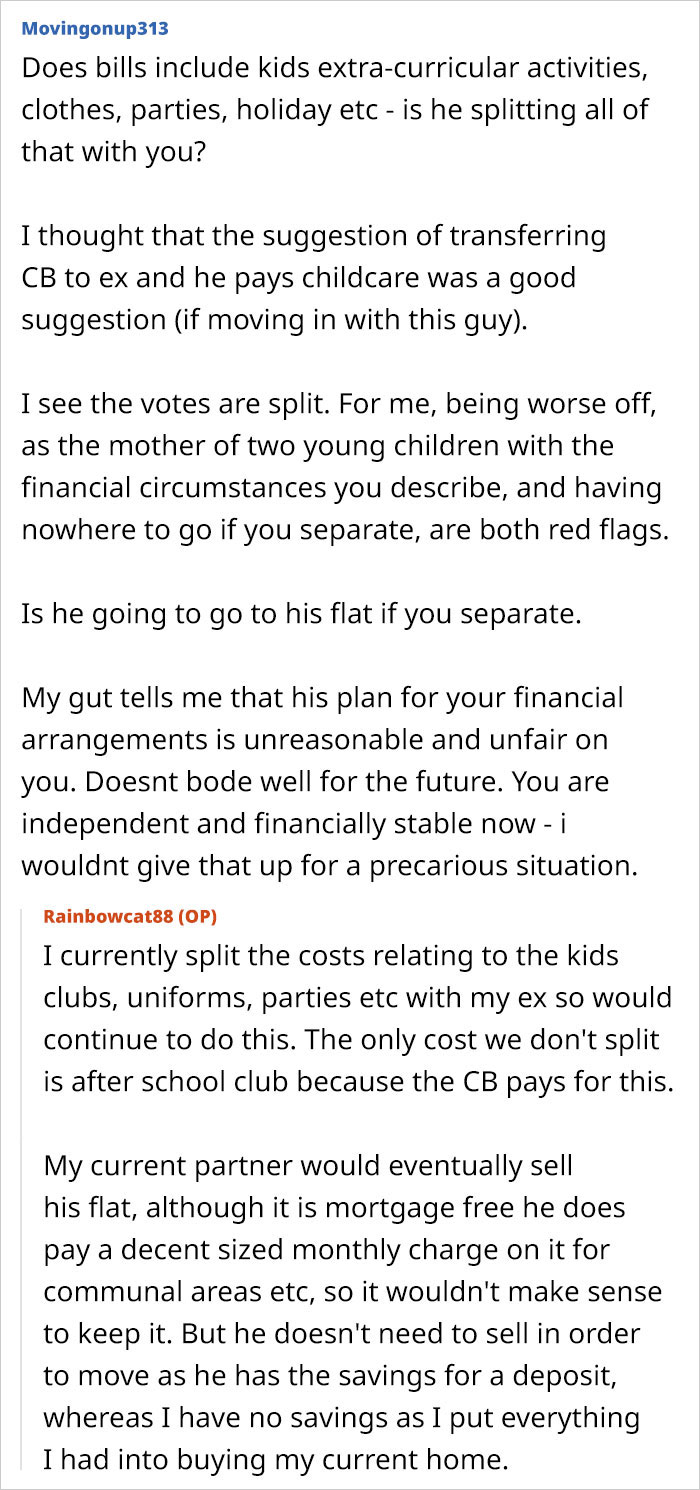
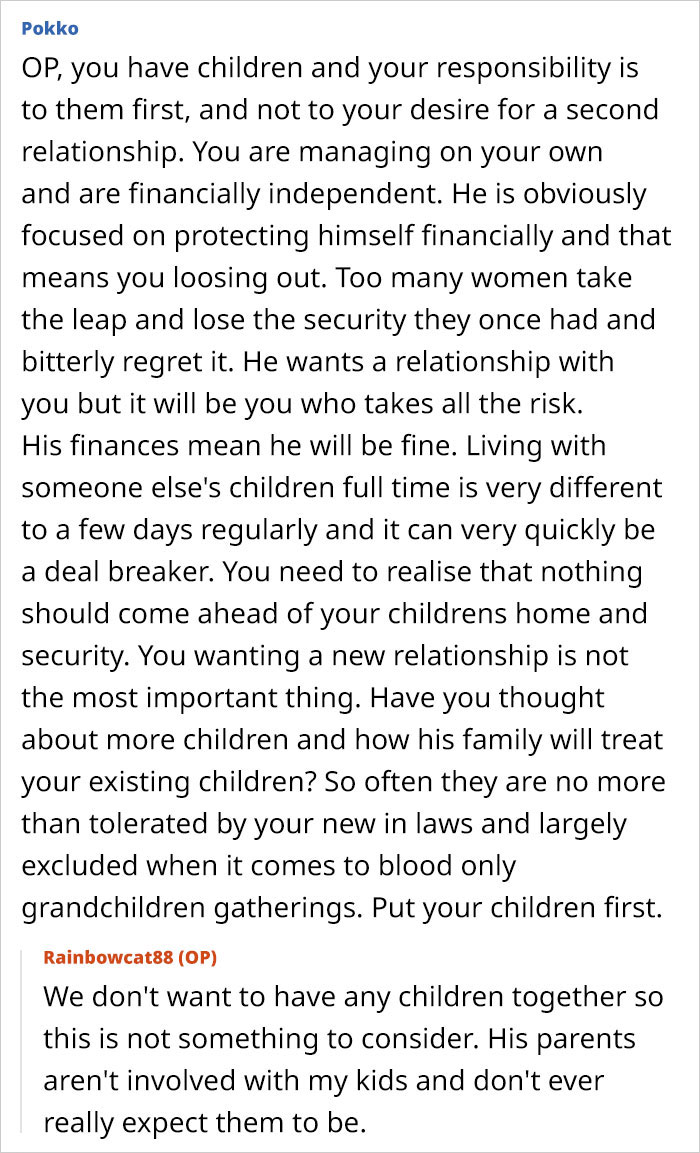
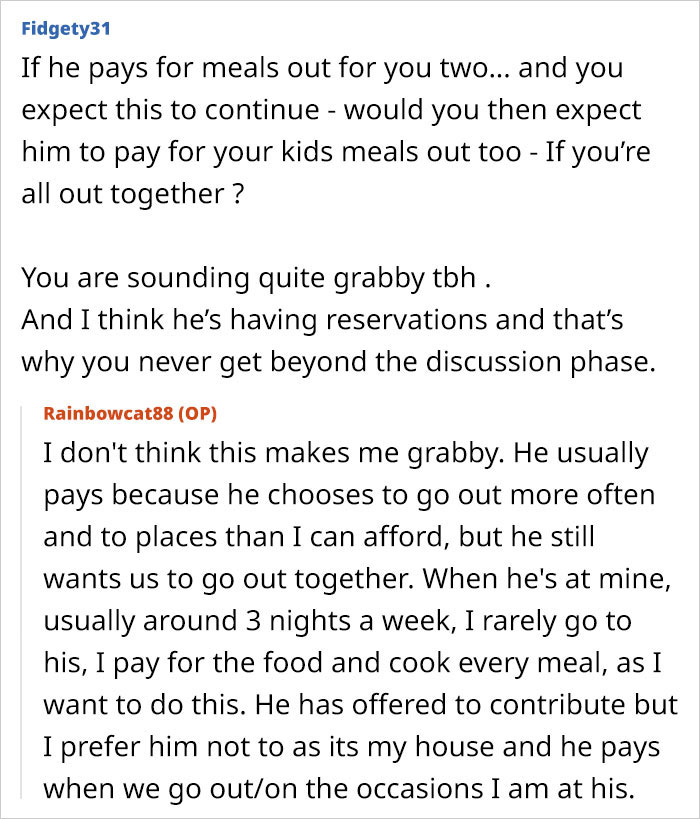
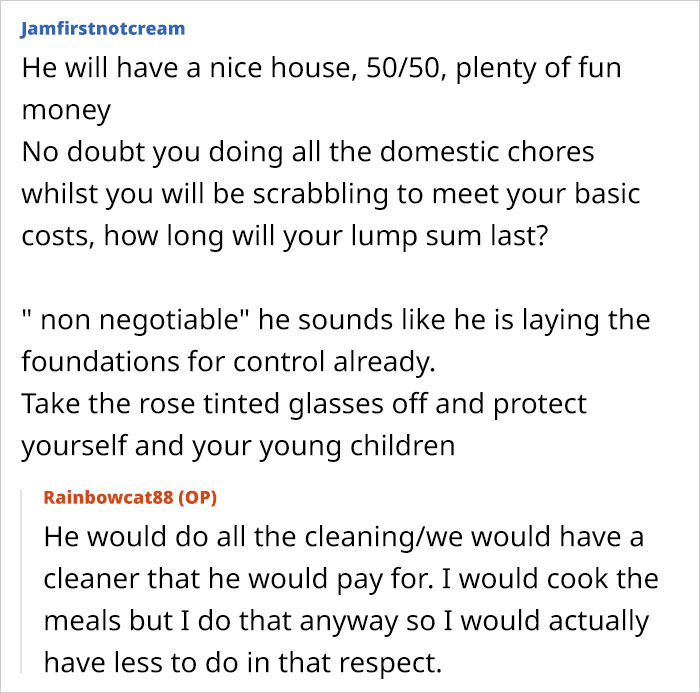
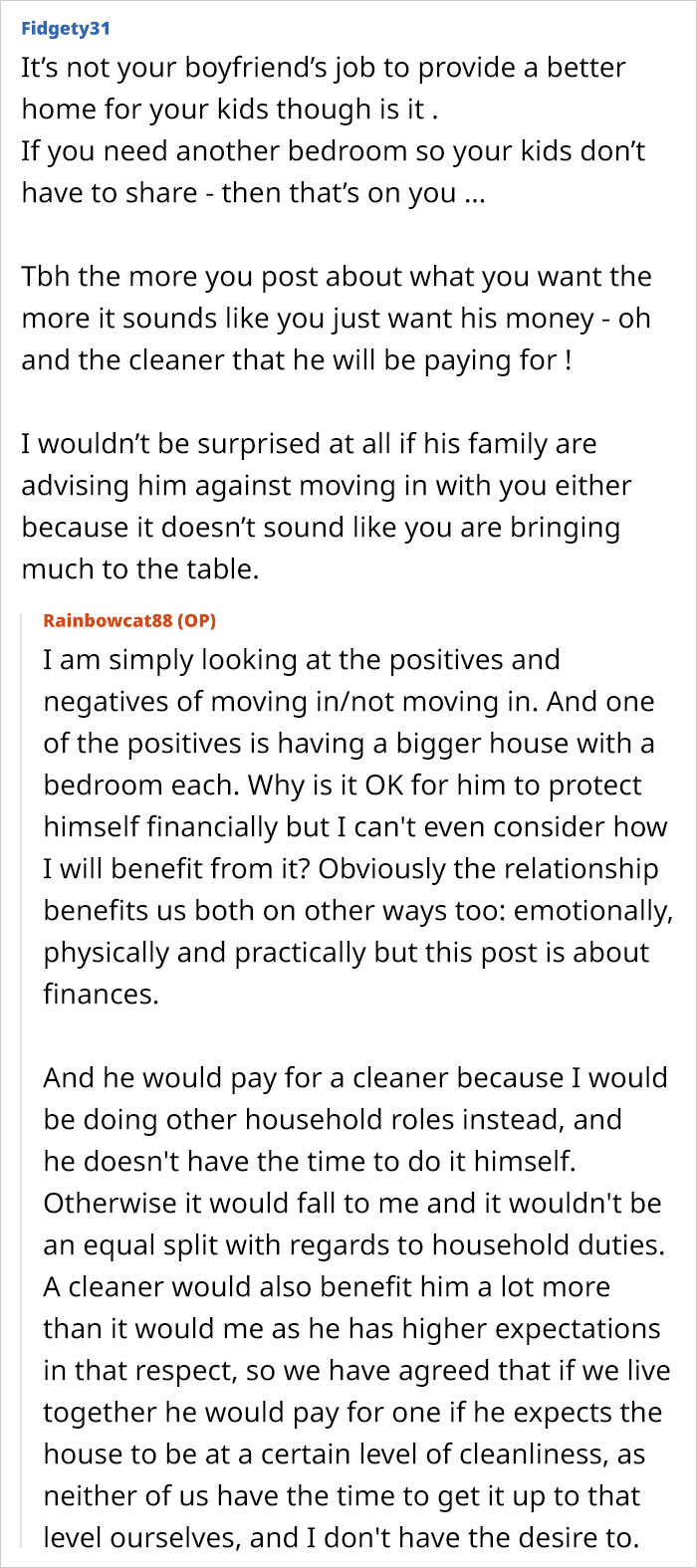
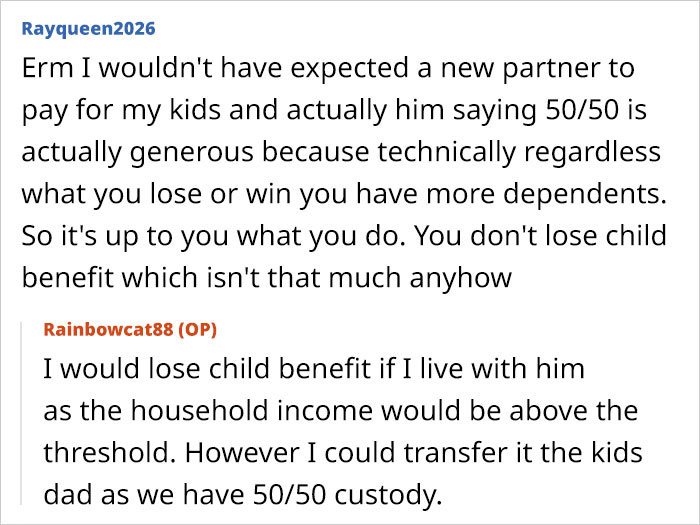
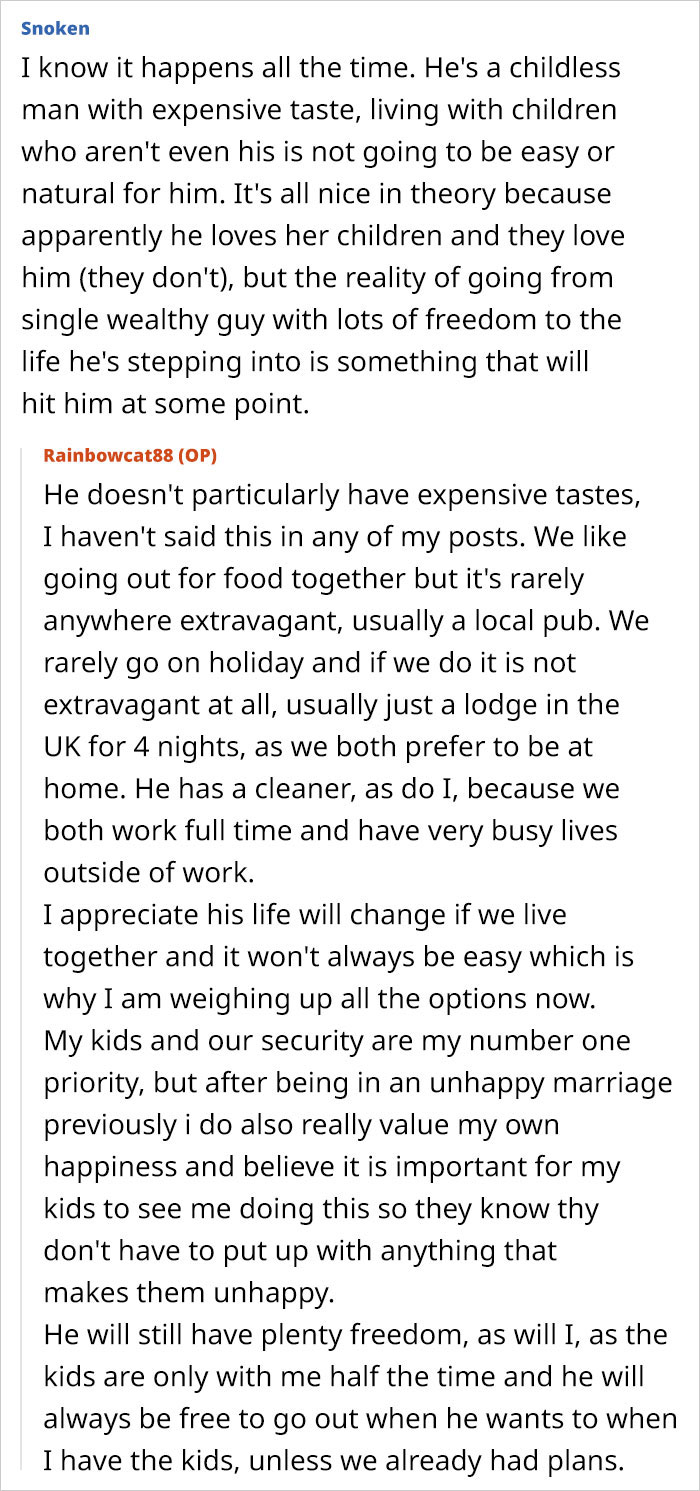
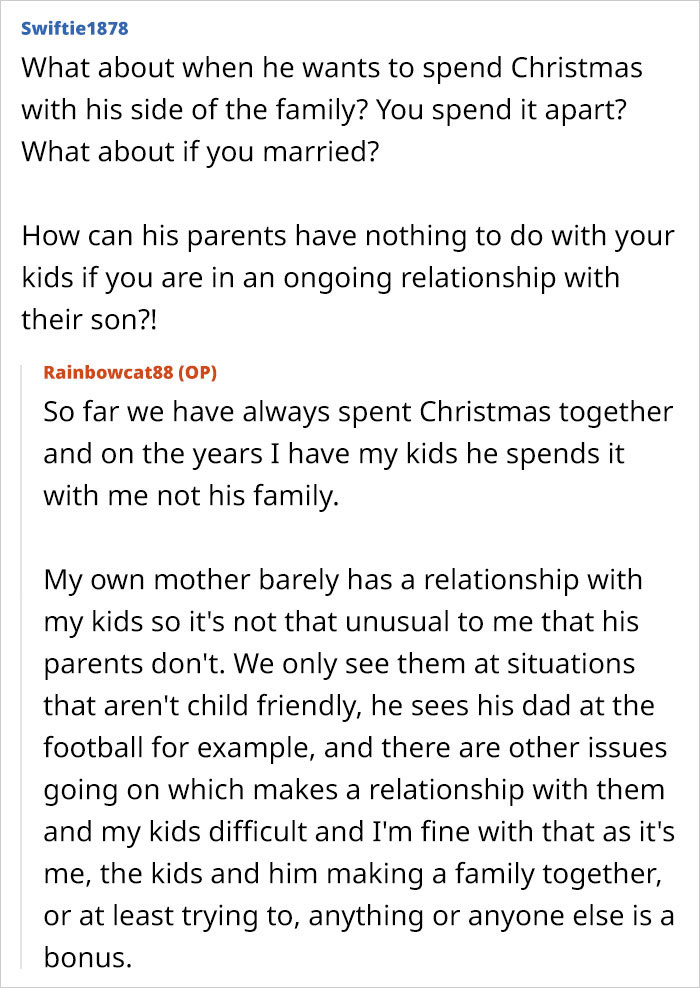
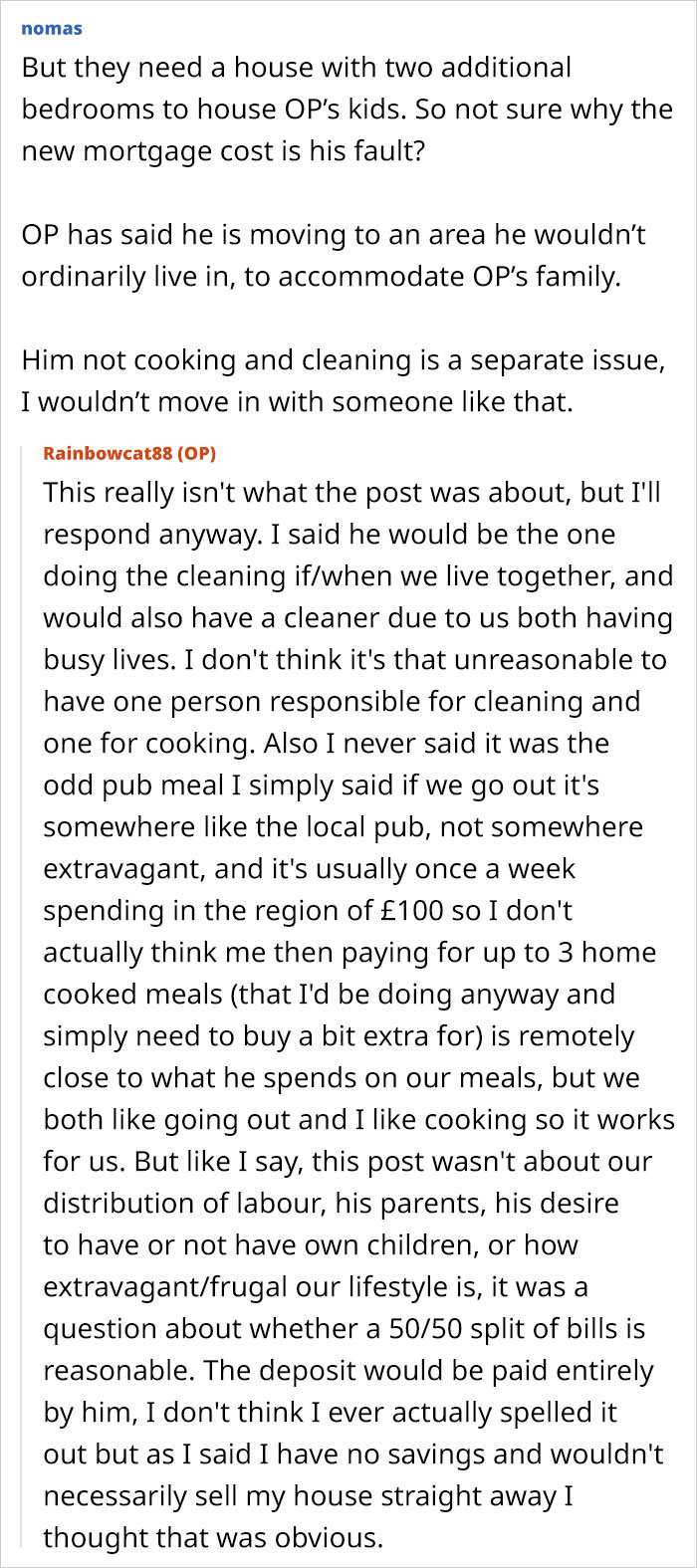
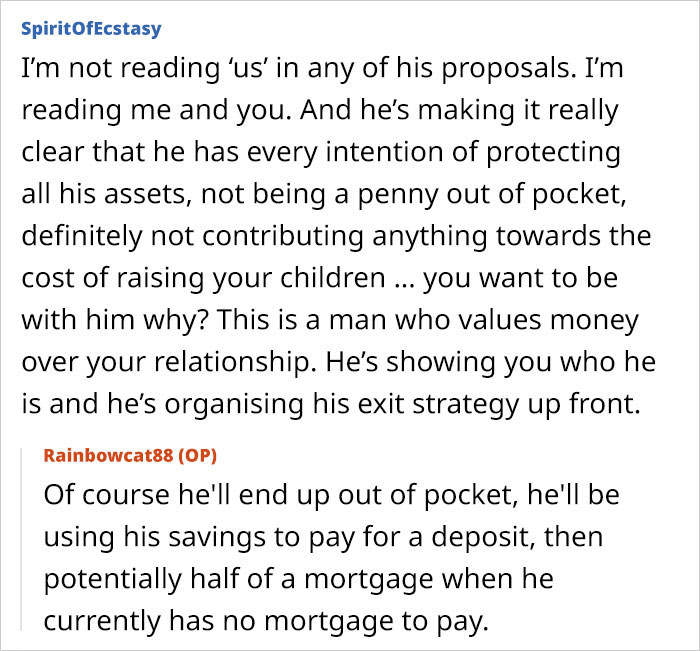
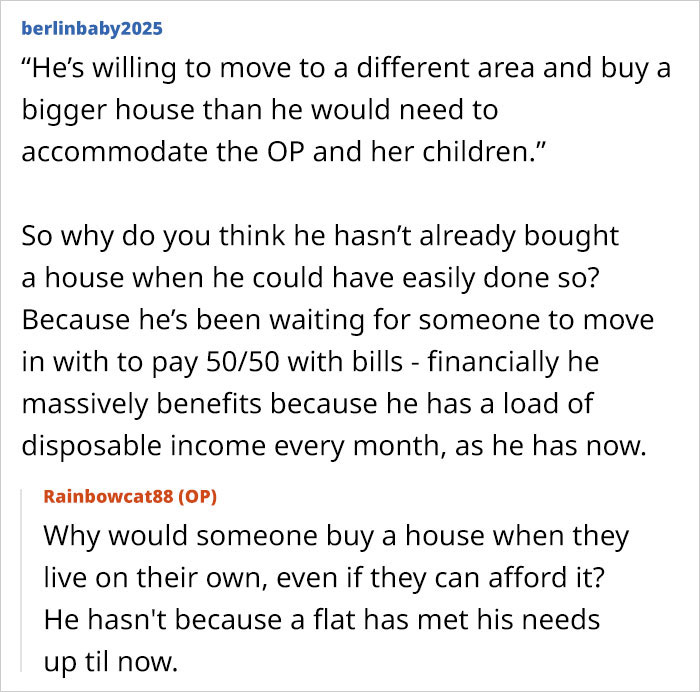
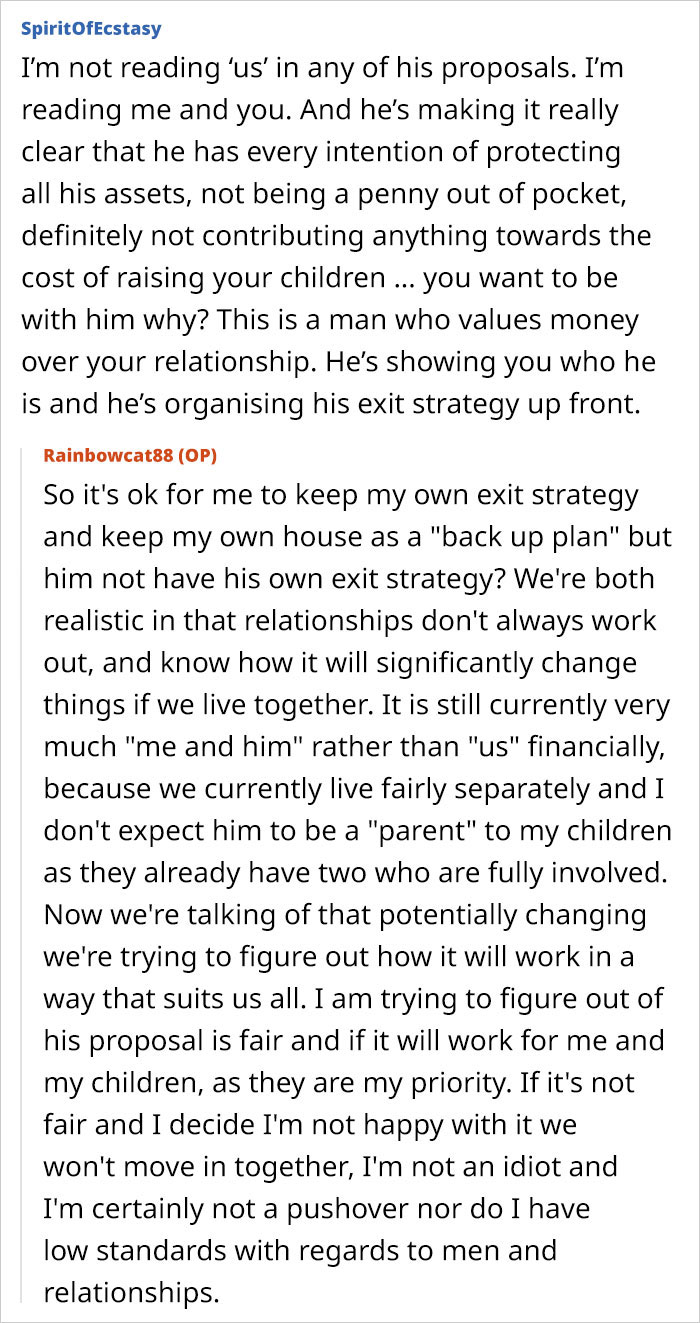
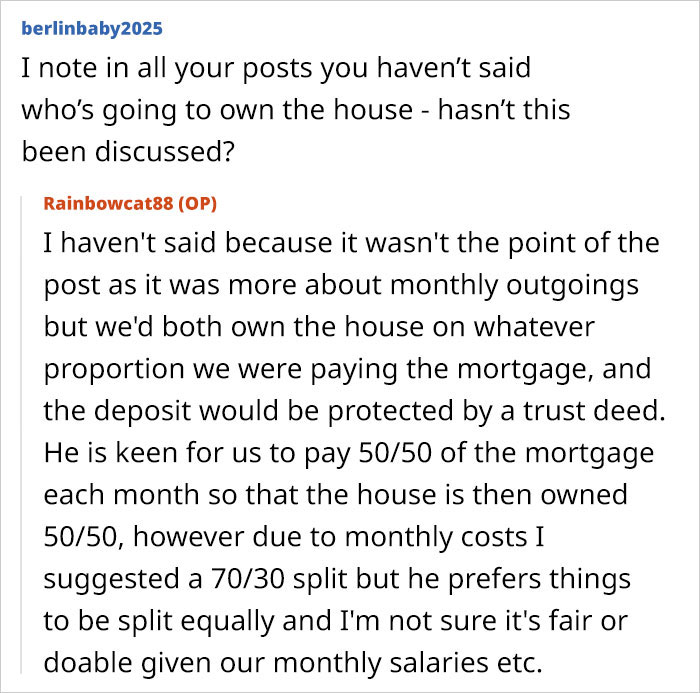
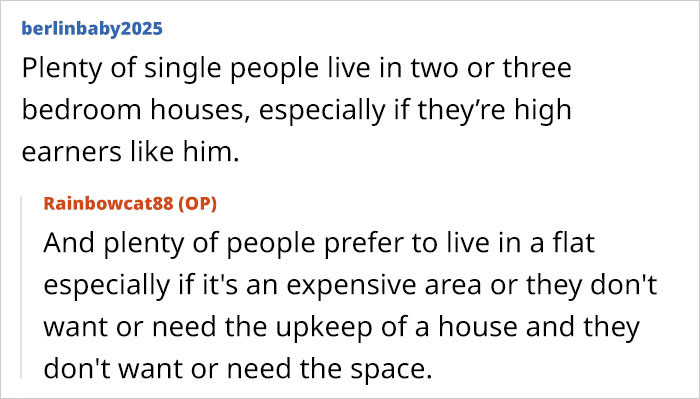
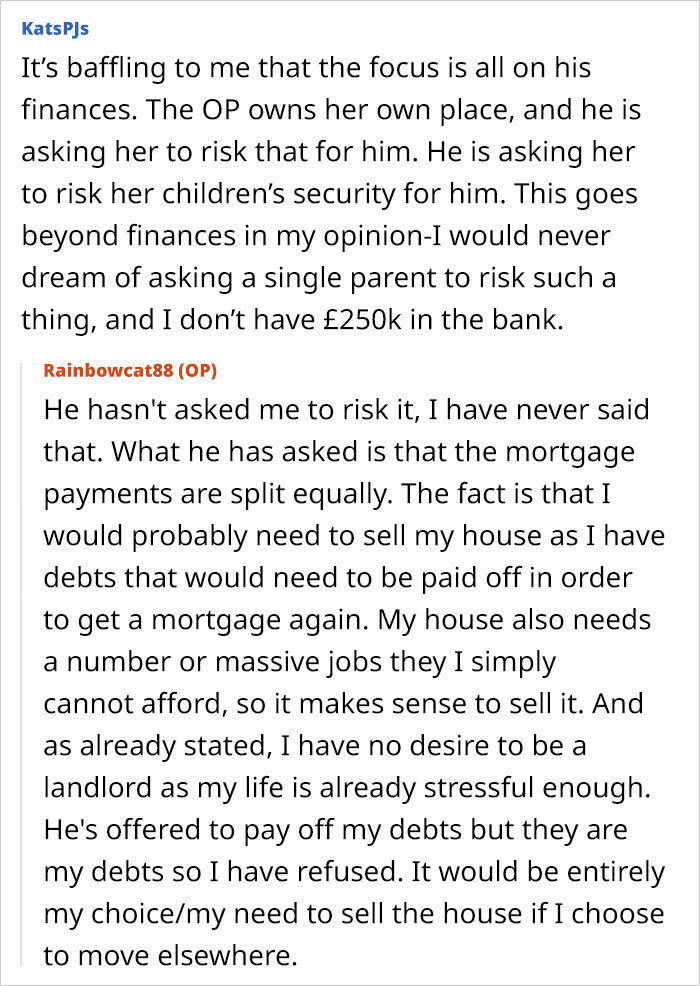
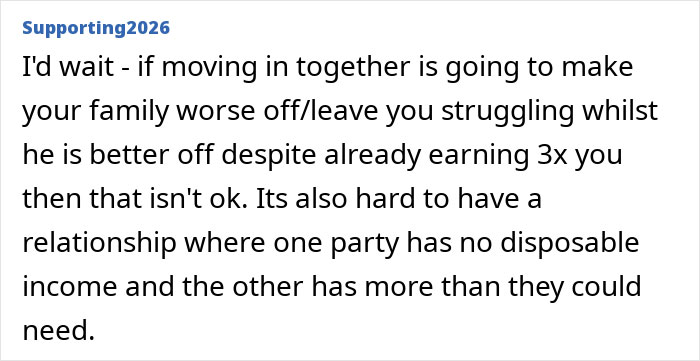
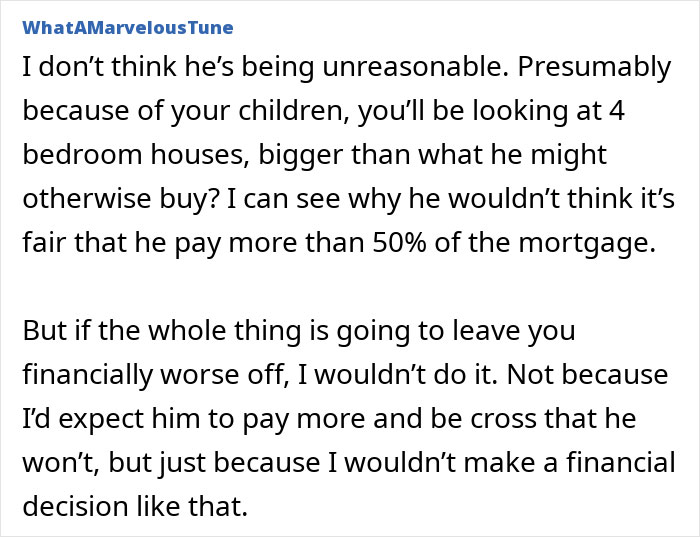
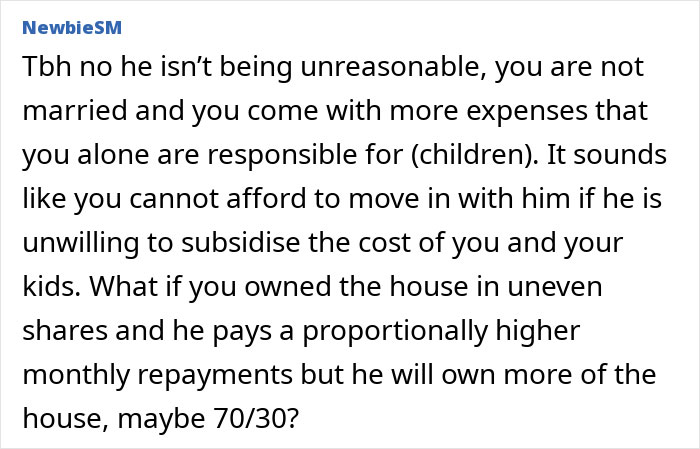
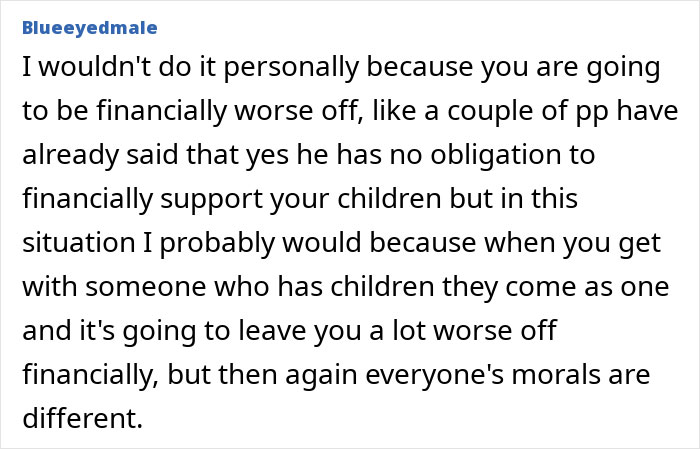
A netizen decided to turn to the internet for advice when she was considering moving in with her partner. He was considerably better off, but still insisted that they split the bills 50/50. At the same time, the woman would probably have to sell their house to make it work. So people online decided to weigh in and give some advice.
Image credits: Natalia Blauth / Unsplash (not the actual photo)
Image credits: RDNE Stock project / Pexels (not the actual photo)
Image credits: Alena Darmel / Pexels (not the actual photo)
Image credits: Rainbowcat88
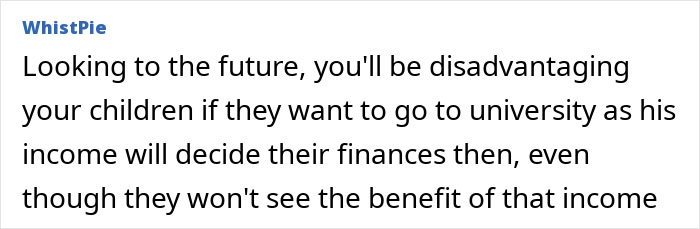
Transitioning from separate households to a shared life is a significant milestone that often exposes the deep rift between romantic ideals and financial reality. When one person carries the weight of childcare costs and a mortgage while the other enjoys the freedom of substantial savings and high earnings, the traditional fifty fifty split can quickly transform from a symbol of equality into a source of resentment.
True partnership usually requires looking beyond raw numbers to find a model of financial equity that acknowledges the disparate starting points of each individual. Insisting on an even split regardless of income gaps ignores the fact that a flat rate might represent ten percent of one person’s take home pay but fifty percent of another person’s entire budget. This imbalance can trap the lower earner in a cycle of stress where they are constantly playing catch up rather than building a future.
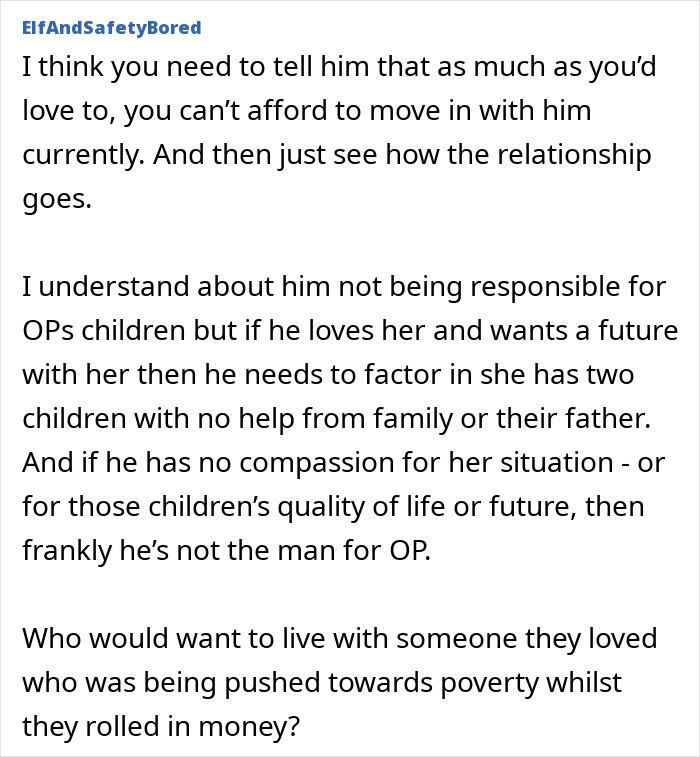
Living together also introduces the complex dynamics of step parenting and how those responsibilities translate into household contributions. While it is understandable that a partner without children might hesitate to fully subsidize someone else’s family, a refusal to contribute to a shared environment that accommodates those children can feel cold. A home is a collective ecosystem where the needs of the smallest members dictate the space and resources required. If a partner views the children as a separate financial liability rather than part of the new family unit, it suggests a fundamental misalignment in how they perceive the commitment. Negotiating these boundaries requires a delicate touch and a willingness to see the family as a whole rather than a collection of individuals with separate balance sheets.
The concept of a non-negotiable stance in a relationship is often a red flag because it replaces collaboration with a mandate. Healthy financial communication depends on the ability to adjust expectations as circumstances evolve. For someone who has worked hard to maintain their own home and provide for their children without outside help, selling a property to move into a shared space represents a massive leap of faith. Relinquishing that physical and financial safety net deserves a reciprocal level of security and understanding from their partner. A partner who expects a refund for the months spent waiting for a house sale might be thinking like a landlord rather than a life companion. This transactional approach can erode the trust necessary for a long term bond.
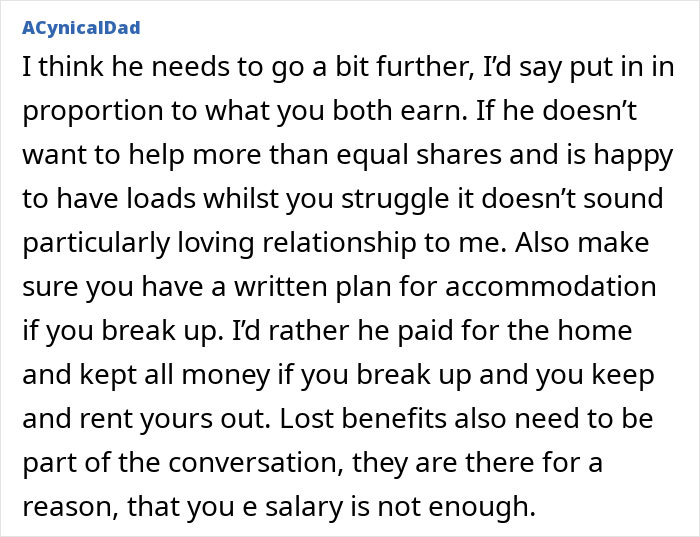
To bridge this gap, many couples find success in a percentage based contribution model. This approach ensures that both people retain a similar amount of disposable income for their personal needs and savings after the communal bills are paid. It shifts the focus from what is equal to what is fair, allowing the person with fewer resources to breathe and feel like an equal stakeholder in the home. If one person is significantly more wealthy, their insistence on an even split might inadvertently force the other into a lifestyle they cannot afford, which eventually leads to burnout and a feeling of being a second class citizen in their own living room.
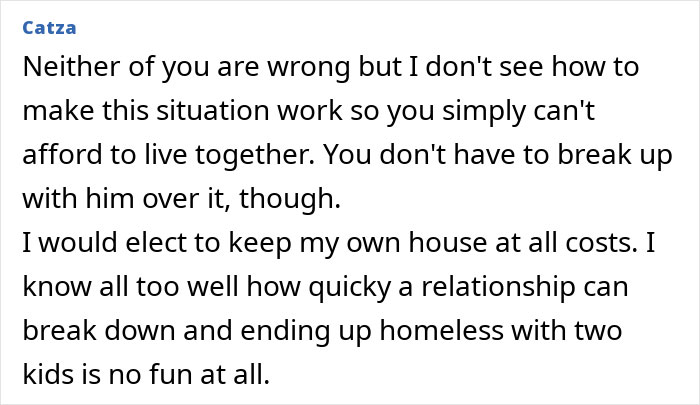
Before signing any papers or packing any boxes, it is vital to discuss legal protections like a cohabitation agreement to ensure that the proceeds from a house sale are not lost if the relationship ends. Protecting one’s assets is not an act of distrust but a responsible move for anyone with children to consider. If the vision for the future involves one person struggling to keep up with an expensive lifestyle they cannot afford while the other accumulates more wealth, the relationship is likely to buckle under the pressure. It might be better to remain in separate homes where independence is preserved until a more equitable arrangement can be reached. Ultimately, the goal is to create a life where both parties feel valued and secure regardless of the digits in their bank accounts. Financial compatibility is just as important as emotional connection, and finding a path that honors both people’s contributions is the only way to build a foundation that lasts.

By entering your email and clicking Subscribe, you're agreeing to let us send you customized marketing messages about us and our advertising partners. You are also agreeing to our Privacy Policy.
Thank you! You've successfully subscribed to newsletters!




I don't like the guy. He decided to have a relationship with a woman with kids so he needs to take responsibility of those kids too. They are not compatible and she's making herself vulnerable.
He does not have to fi anything, they are not his kids. And paying only 50% of expenses for 3 people and he also passt 50% is already pretty generous...
Load More Replies... I don't like the guy. He decided to have a relationship with a woman with kids so he needs to take responsibility of those kids too. They are not compatible and she's making herself vulnerable.
He does not have to fi anything, they are not his kids. And paying only 50% of expenses for 3 people and he also passt 50% is already pretty generous...
Load More Replies...

































 No fees, cancel anytime

























30
4